“If thou wilt make a man happy, add not unto his riches but take away from his desires.”
Epicurus
 quolira
.com
quolira
quolira.com
Epicurus is saying that genuine wisdom, especially the kind earned through learning to live with less, produces a generous character rather than a grasping one. A person who has worked out what they truly need and has made peace with those modest necessities no longer feels the anxious urge to accumulate. From that secure position, sharing comes naturally and taking feels unnecessary. Wisdom, in this view, quietly converts scarcity into generosity.
This saying belongs to the Vatican Sayings, a collection of short Epicurean maxims preserved in a Vatican manuscript and rediscovered by scholars in the nineteenth century. Epicurean philosophy placed great emphasis on distinguishing genuine needs from artificial desires. By training oneself to be satisfied with natural and necessary things, a person could achieve a stable inner calm. Generosity and community mattered deeply within the Epicurean school, where members lived and shared together. This saying reflects both the school's practical lifestyle and its broader ethical vision.
Epicurus was an ancient Greek philosopher who established his school in Athens near the end of the fourth century BCE. The community he built, known as the Garden, was organized around shared philosophical life and close friendship. He argued that pleasure, rightly understood as the absence of pain and anxiety, was the proper goal of human life, and that simple living was the surest way to achieve it. His original writings survive mostly in fragments, but summaries and collections of his sayings continue to represent his thought clearly.
“If thou wilt make a man happy, add not unto his riches but take away from his desires.”
Epicurus
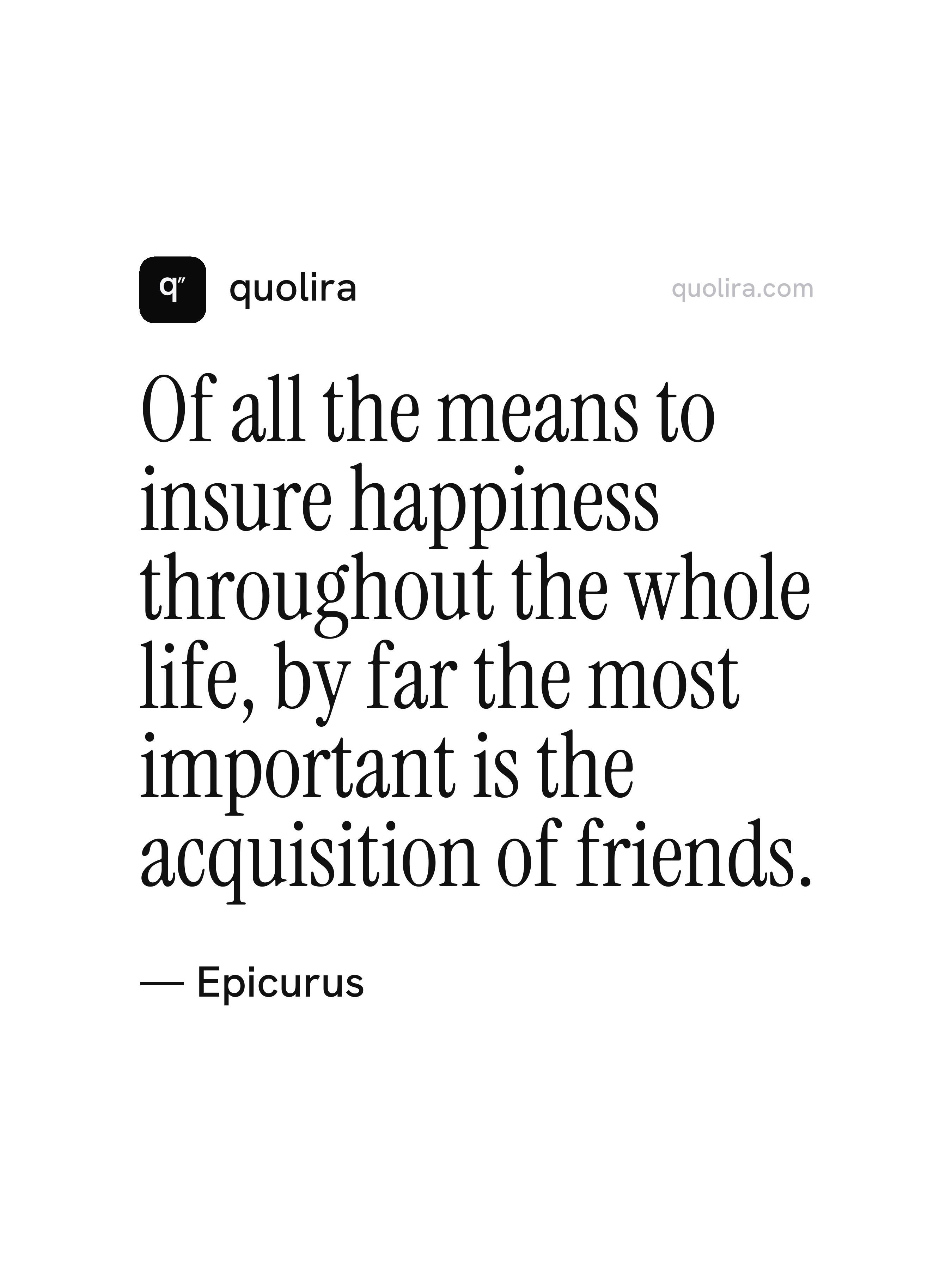
“Of all the means to insure happiness throughout the whole life, by far the most important is the acquisition of friends.”
Epicurus · Principal Doctrines
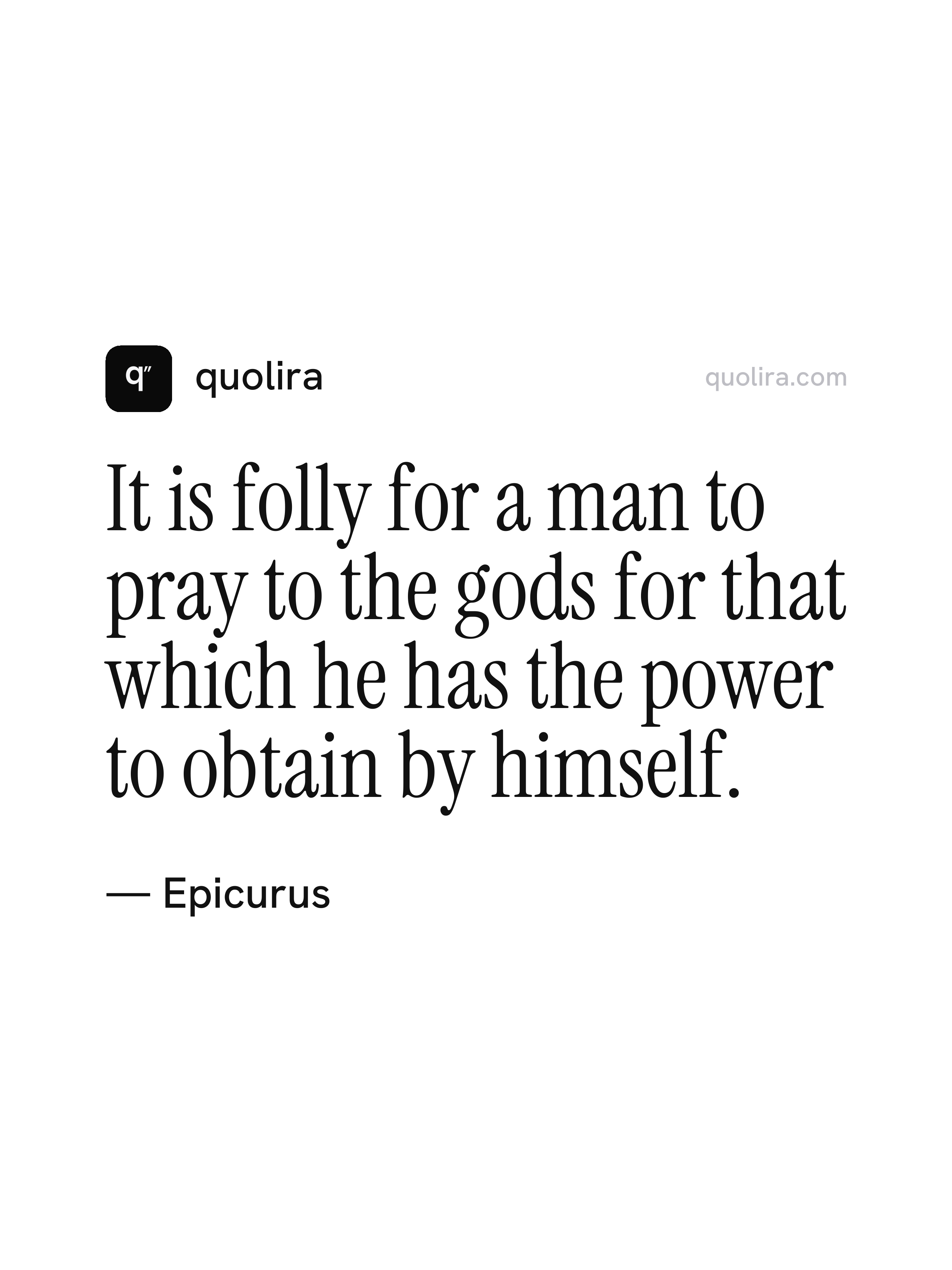
“It is folly for a man to pray to the gods for that which he has the power to obtain by himself.”
Epicurus · Vatican Sayings
“Is a man unhappy because of exile? Then set before me one who is content in exile.”
Epicurus
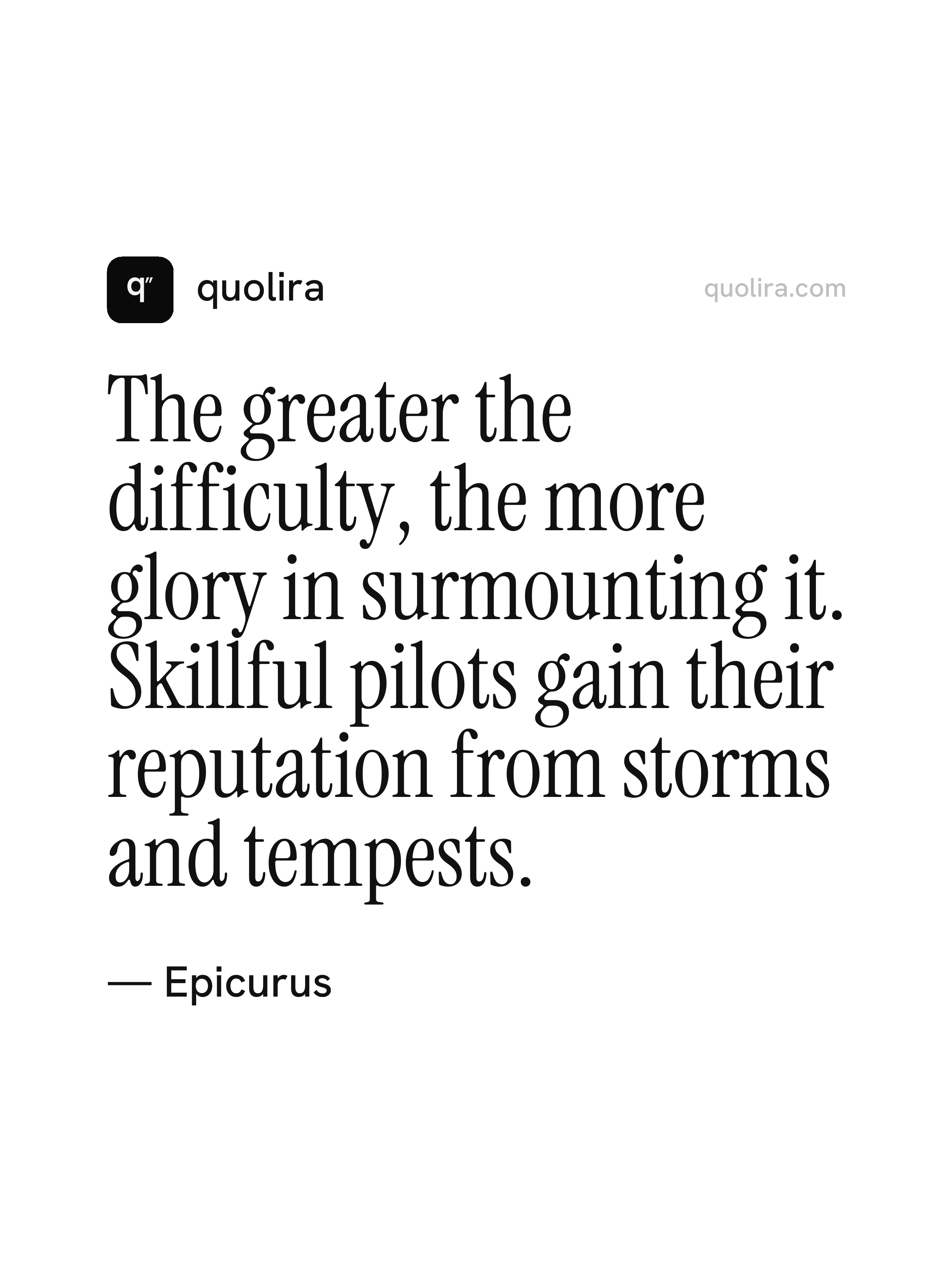
“The greater the difficulty, the more glory in surmounting it. Skillful pilots gain their reputation from storms and tempests.”
Epicurus
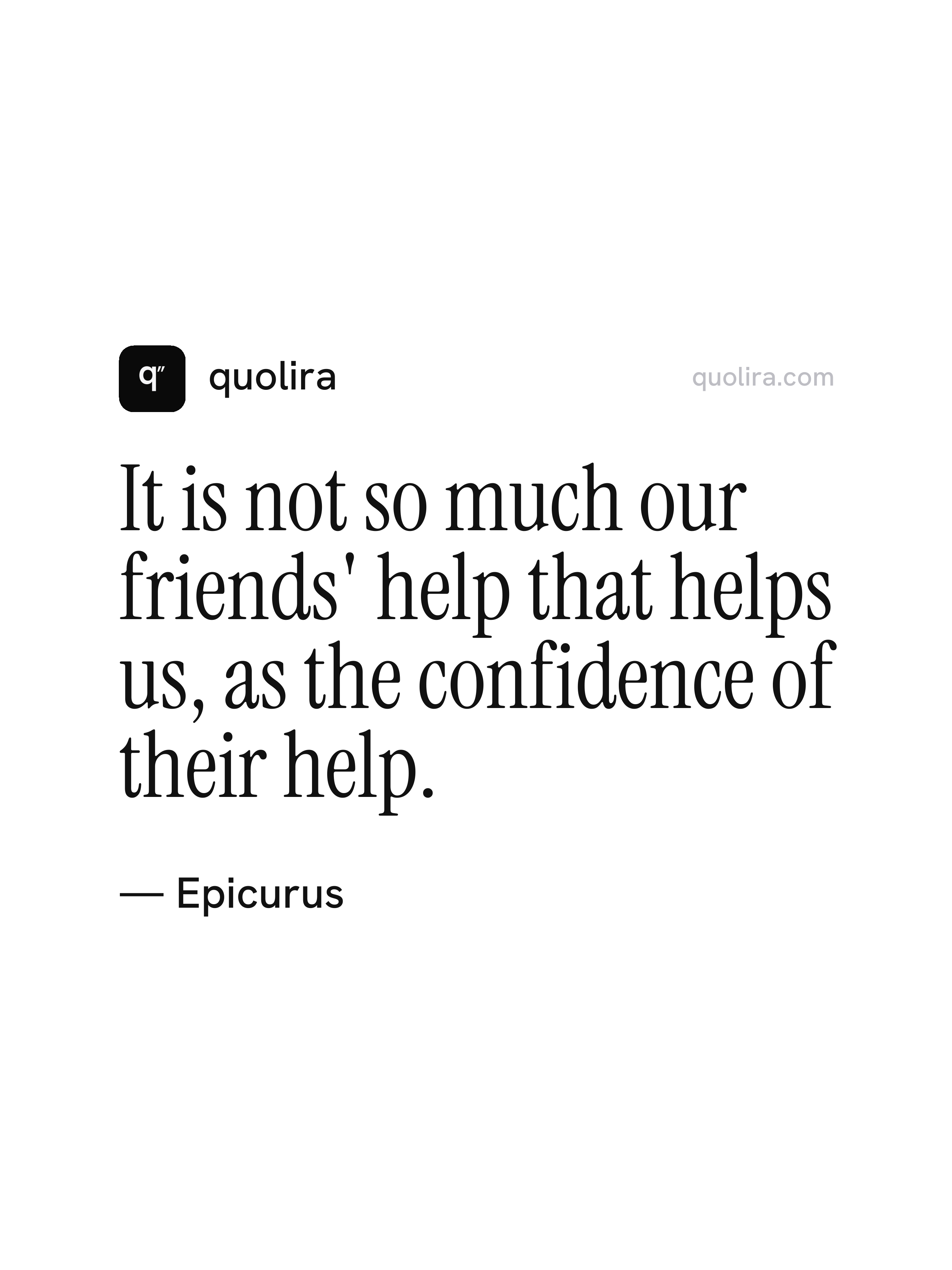
“It is not so much our friends' help that helps us, as the confidence of their help.”
Epicurus · Vatican Sayings
“Pain does not last continuously in the flesh, but the acutest pain is there for a very short time.”
Epicurus · Principal Doctrines
“We must remember that the future is neither wholly ours nor wholly not ours, so that neither must we count upon it as quite certain to come nor despair of it as quite certain not to come.”
Epicurus · Letter to Menoeceus
“Not what we have but what we enjoy, constitutes our abundance.”
Epicurus
“He who is not satisfied with a little, is satisfied with nothing.”
Epicurus · Vatican Sayings
“Do not spoil what you have by desiring what you have not; remember that what you now have was once among the things you only hoped for.”
Epicurus
“Death is nothing to us, since when we are, death has not come, and when death has come, we are not.”
Epicurus · Letter to Menoeceus