“Of all the means to insure happiness throughout the whole life, by far the most important is the acquisition of friends.”
Epicurus · Principal Doctrines
 quolira
.com
quolira
quolira.com
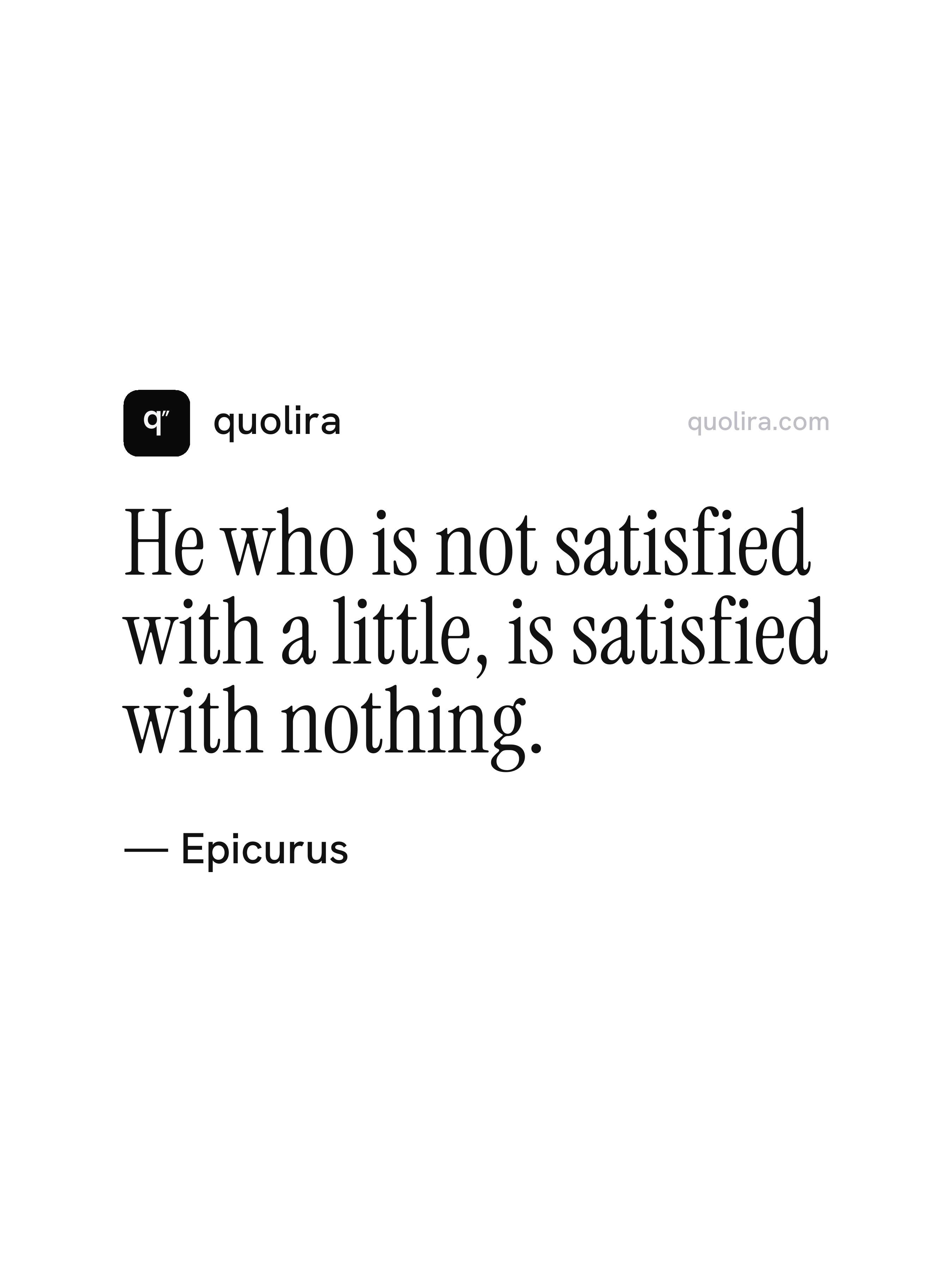
This saying offers a counterintuitive prescription for happiness. The instinct is to think that giving someone more resources will make them happier, but Epicurus points in the opposite direction. Riches piled on top of unlimited desires only create more hunger, not more satisfaction. The real work of improving a life is trimming back the wants themselves, because a smaller appetite is satisfied far more easily than a larger one, regardless of what is available.
This saying reflects the core of Epicurean ethics, which consistently located the source of unhappiness not in what people lacked but in the restless, often irrational nature of their desires. Epicurus taught his followers to examine their own cravings carefully and to distinguish between those that are natural and necessary, those that are natural but not necessary, and those that are neither. The saying has circulated widely and appears in various translations, which accounts for its slightly archaic phrasing. It captures Epicurean thought with particular clarity and has remained one of the most quoted expressions of his philosophy.
Epicurus was an ancient Greek philosopher who founded his school in Athens in the late fourth century BCE. He built a community known as the Garden, where students lived modestly and pursued philosophical conversation together. His central teaching was that a calm, pleasurable life was available to anyone who learned to manage desire wisely and cultivate genuine friendships. Though most of his written work has not survived intact, his ideas have influenced philosophical and ethical thought across many centuries and cultures.
“Of all the means to insure happiness throughout the whole life, by far the most important is the acquisition of friends.”
Epicurus · Principal Doctrines
“It is folly for a man to pray to the gods for that which he has the power to obtain by himself.”
Epicurus · Vatican Sayings
“Is a man unhappy because of exile? Then set before me one who is content in exile.”
Epicurus
“The greater the difficulty, the more glory in surmounting it. Skillful pilots gain their reputation from storms and tempests.”
Epicurus
“It is not so much our friends' help that helps us, as the confidence of their help.”
Epicurus · Vatican Sayings
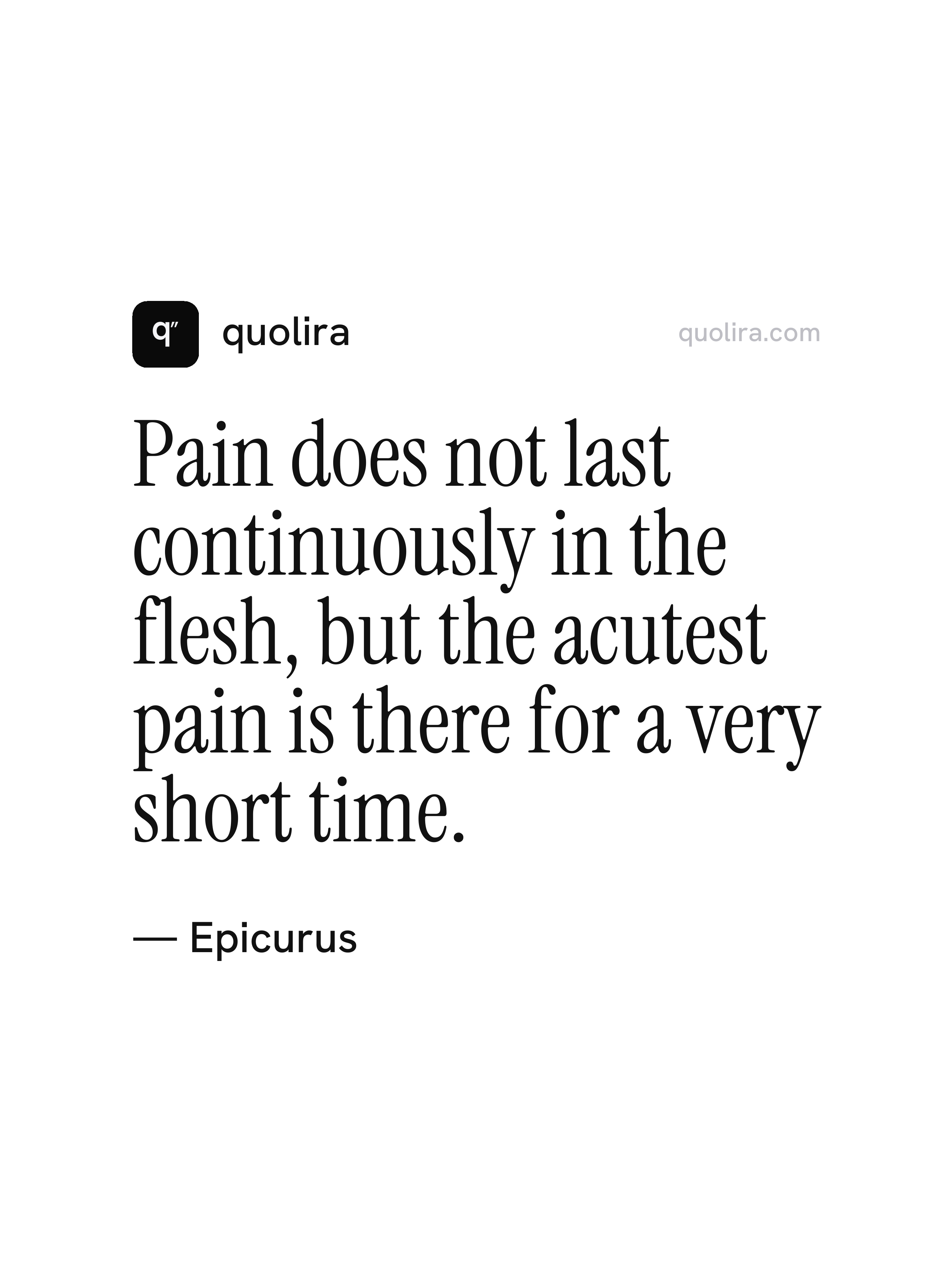
“Pain does not last continuously in the flesh, but the acutest pain is there for a very short time.”
Epicurus · Principal Doctrines
“We must remember that the future is neither wholly ours nor wholly not ours, so that neither must we count upon it as quite certain to come nor despair of it as quite certain not to come.”
Epicurus · Letter to Menoeceus
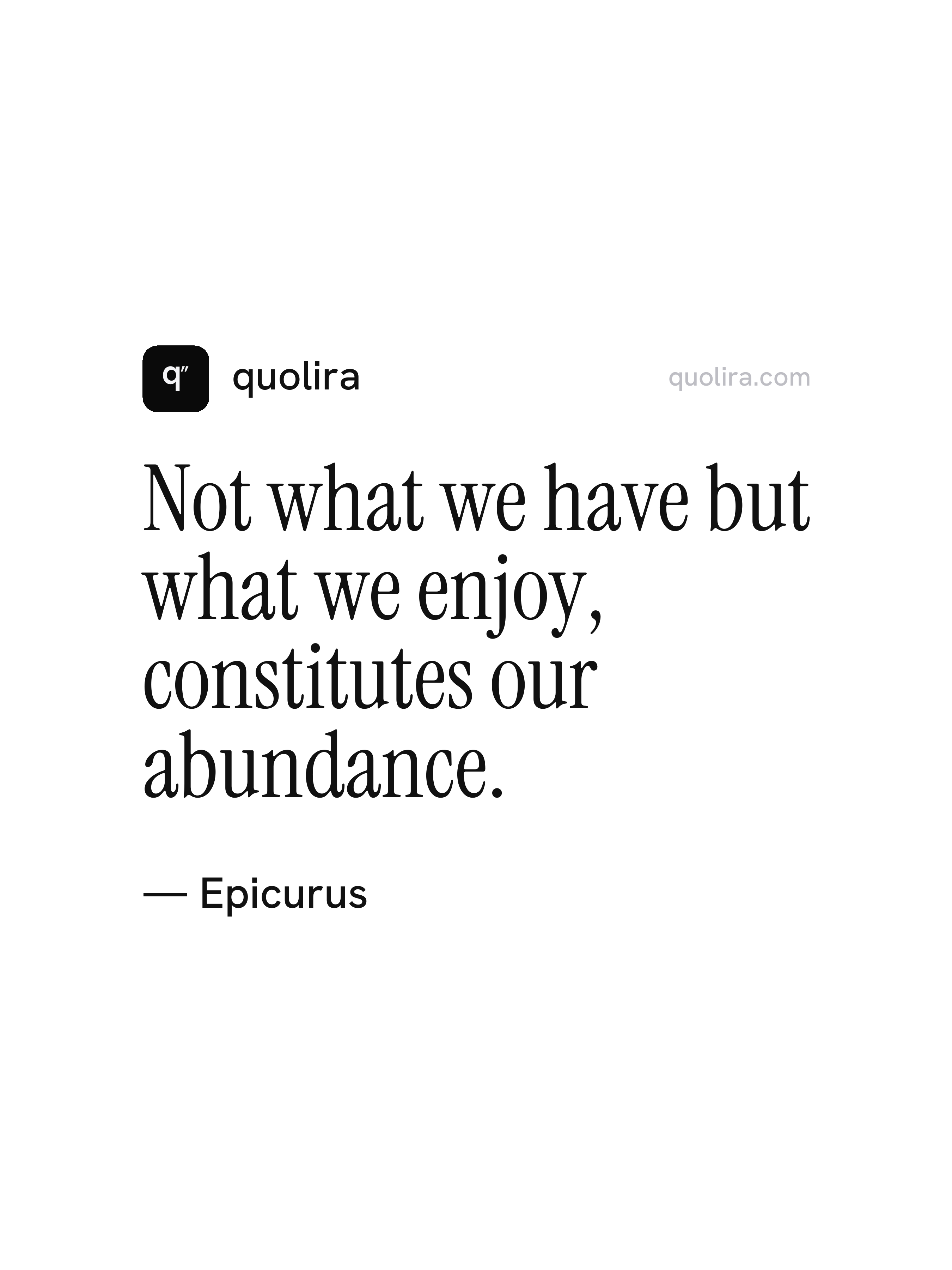
“Not what we have but what we enjoy, constitutes our abundance.”
Epicurus
“He who is not satisfied with a little, is satisfied with nothing.”
Epicurus · Vatican Sayings
“Do not spoil what you have by desiring what you have not; remember that what you now have was once among the things you only hoped for.”
Epicurus
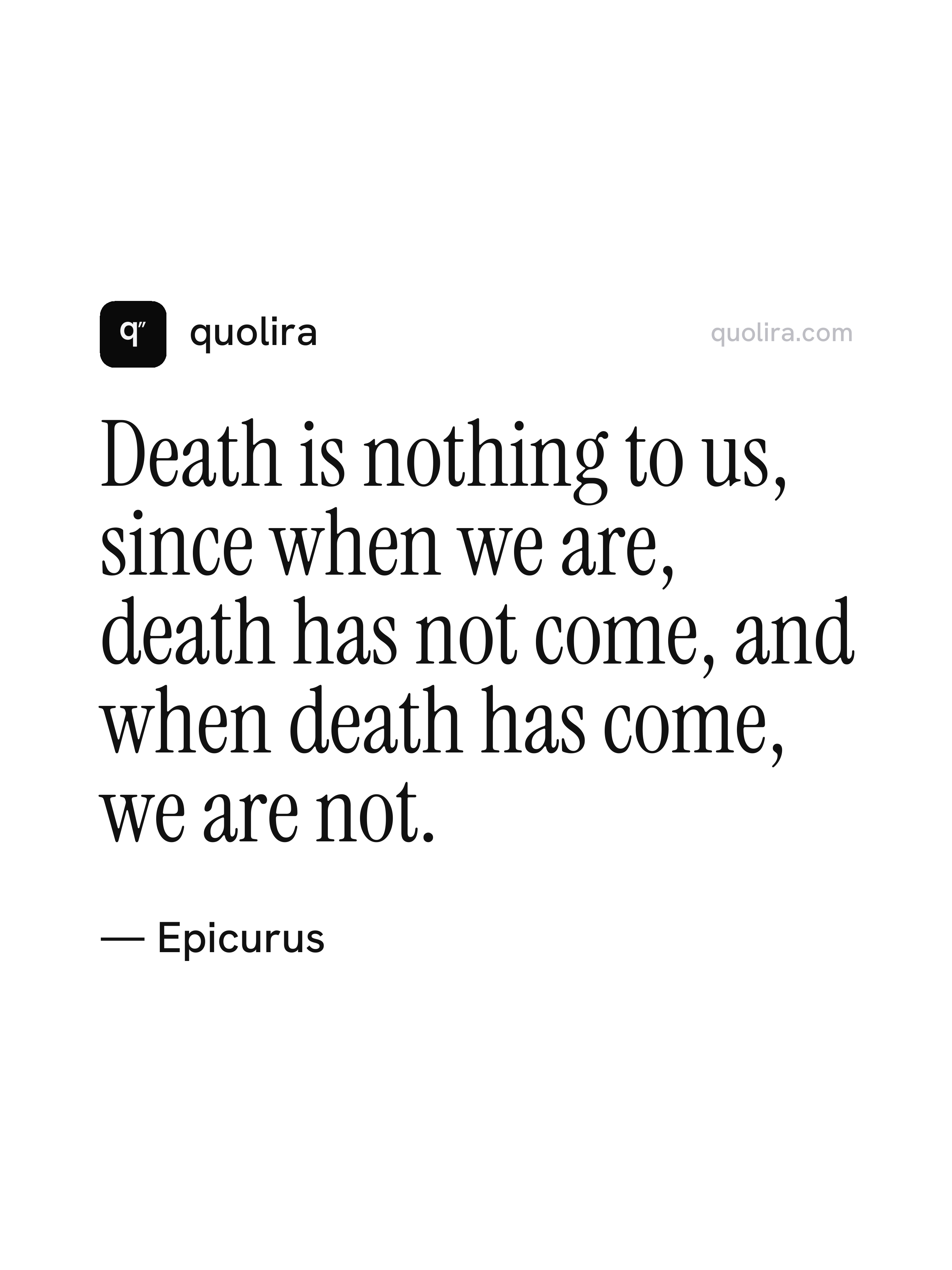
“Death is nothing to us, since when we are, death has not come, and when death has come, we are not.”
Epicurus · Letter to Menoeceus
“Enlightenment ideals are timeless, but their realization at any moment is the strenuous achievement of nations.”
Steven Pinker · Enlightenment Now, 2018