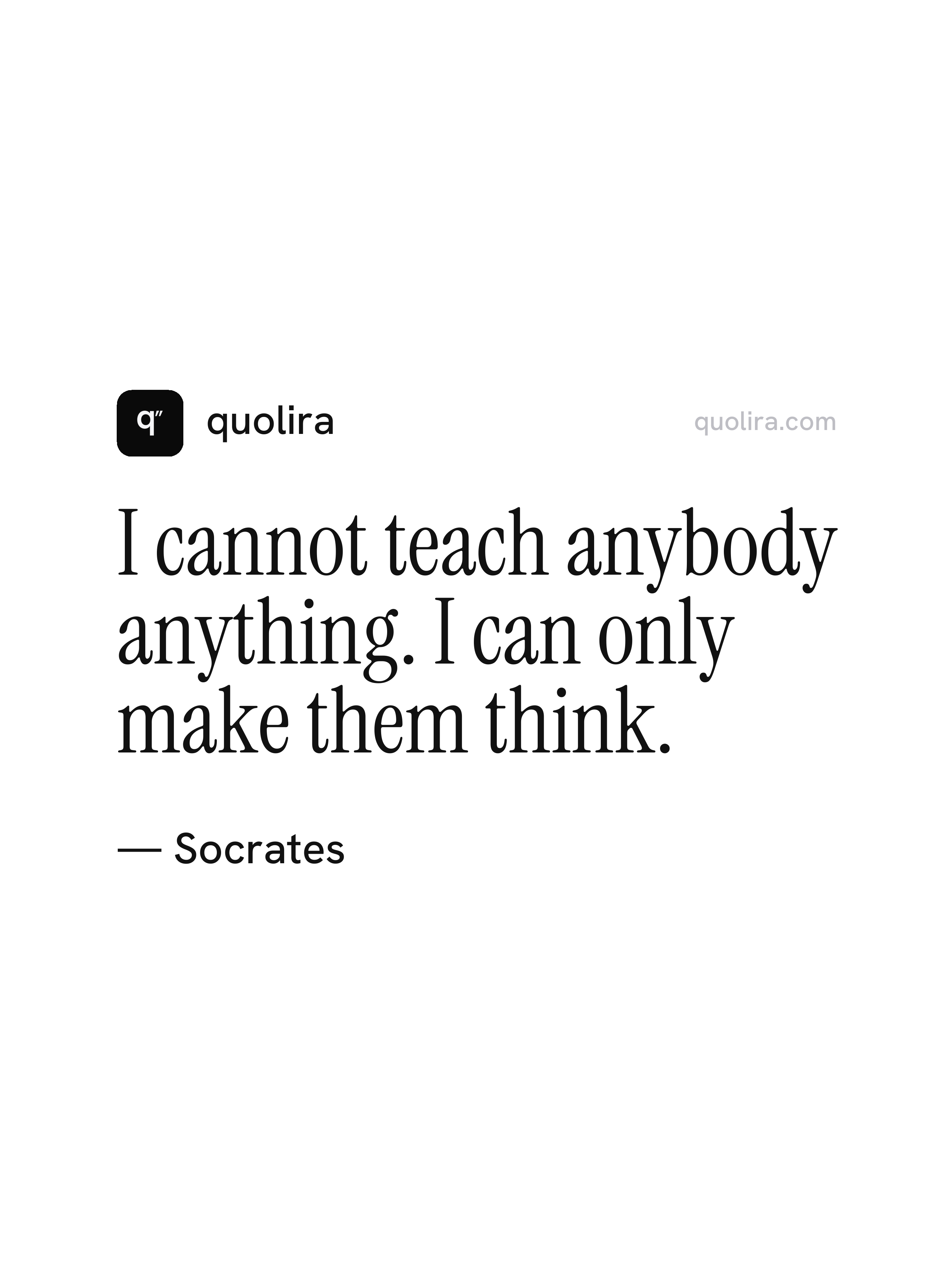
“I cannot teach anybody anything. I can only make them think.”
Socrates · attributed
 quolira
.com
quolira
quolira.com
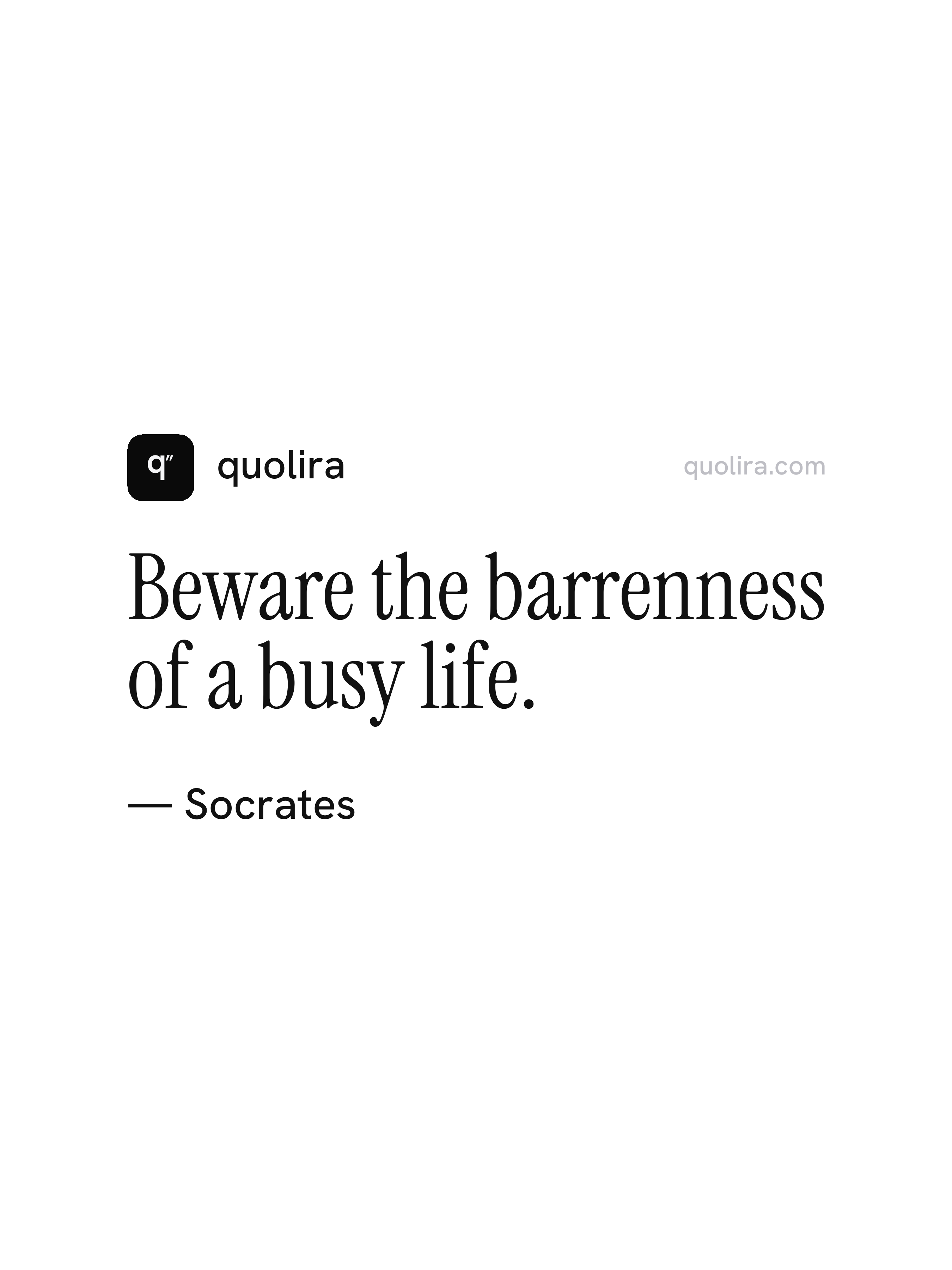
This quote points to a paradox that many people recognize in their own lives: being constantly occupied does not necessarily mean living fully or well. A schedule packed with tasks, obligations, and noise can crowd out reflection, genuine connection, and the kind of thinking that actually matters. The word "barrenness" is key. It suggests that busyness, for all its surface energy, can leave a life empty of real fruit. The quote is an invitation to ask whether activity is serving a meaningful purpose or simply filling time.
This line is frequently attributed to Socrates, though no confirmed ancient source has been identified that records him saying it in this form. The sentiment, however, fits comfortably within Socratic philosophy, which consistently valued thoughtful examination of life over restless activity. The Socratic tradition held that a life lived without reflection was not truly a human life at all. Whether or not the phrasing is his, the idea has circulated widely because it speaks to a tension that feels as relevant today as it would have in any earlier period.
Socrates was one of the most important figures in ancient Greek philosophy, active in Athens during the fifth century BCE. He left no written works, so knowledge of his ideas depends on accounts written by others, mainly Plato and Xenophon. His philosophical method centered on dialogue and questioning, and he was famously skeptical of people who confused busyness or reputation with genuine wisdom. He was tried and executed by Athens in 399 BCE, a fate that has made him a lasting symbol of intellectual integrity.
“I cannot teach anybody anything. I can only make them think.”
Socrates · attributed
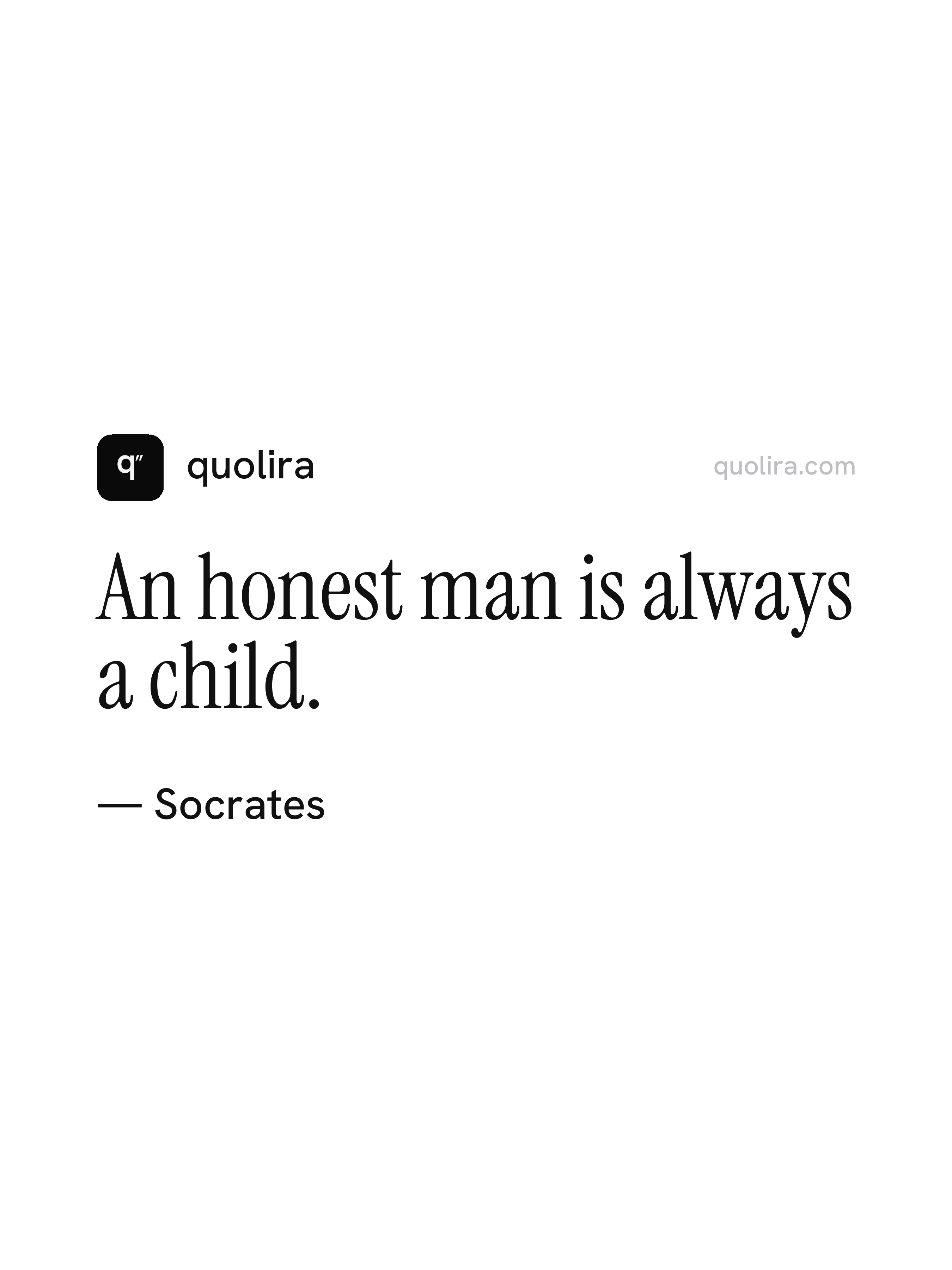
“An honest man is always a child.”
Socrates · attributed
“Education is the kindling of a flame, not the filling of a vessel.”
Socrates · attributed
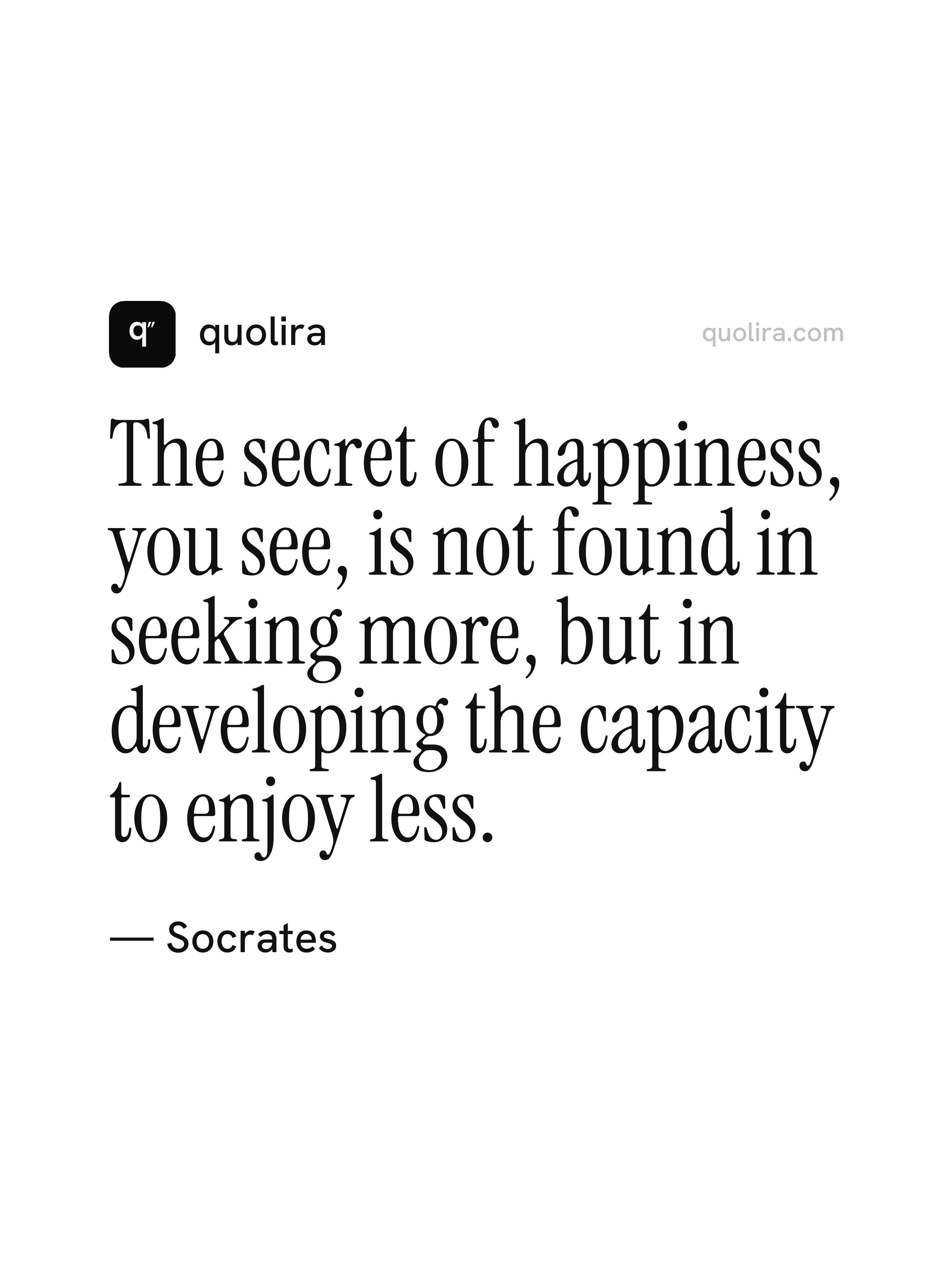
“The secret of happiness, you see, is not found in seeking more, but in developing the capacity to enjoy less.”
Socrates · attributed
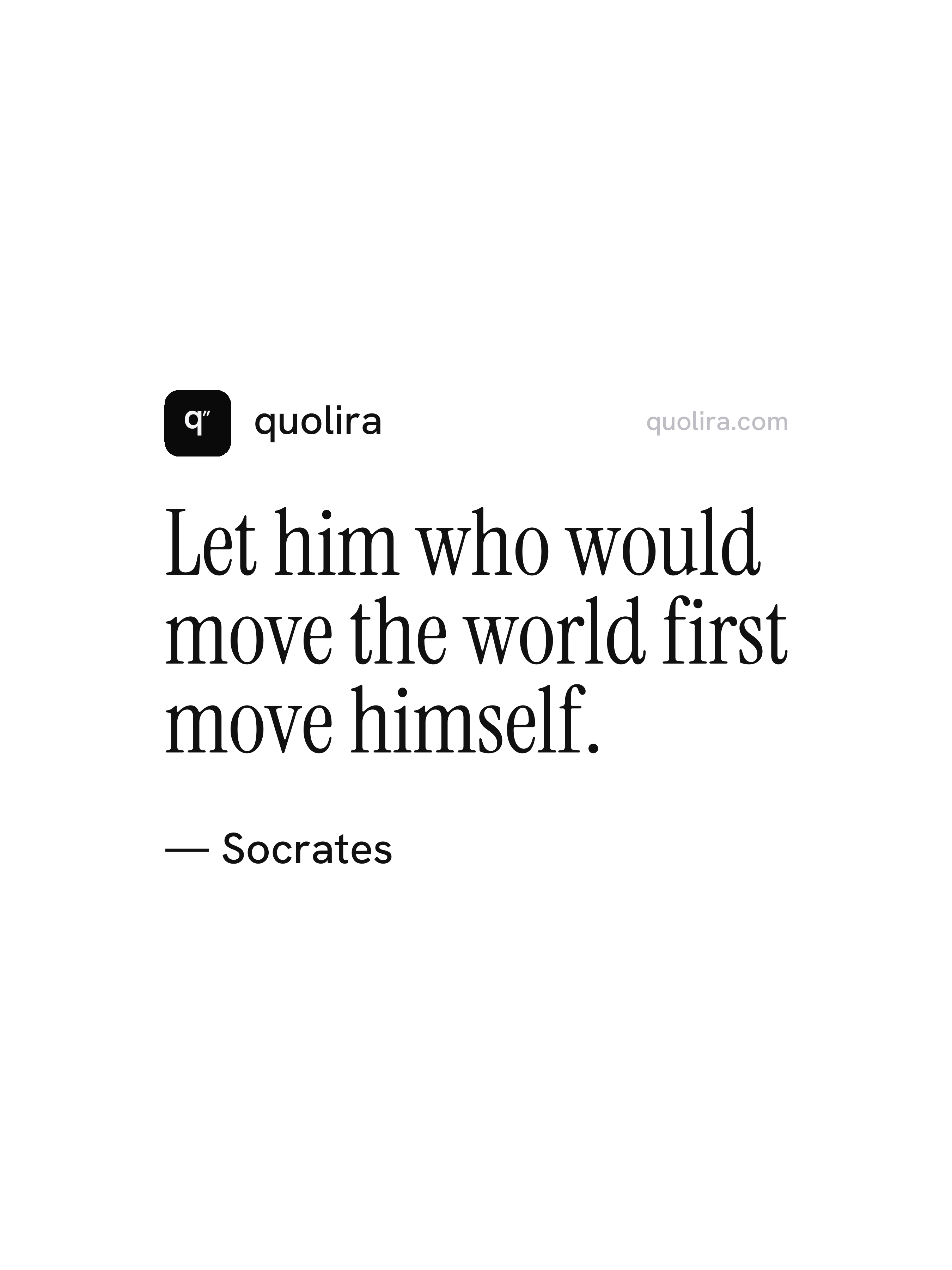
“Let him who would move the world first move himself.”
Socrates · attributed
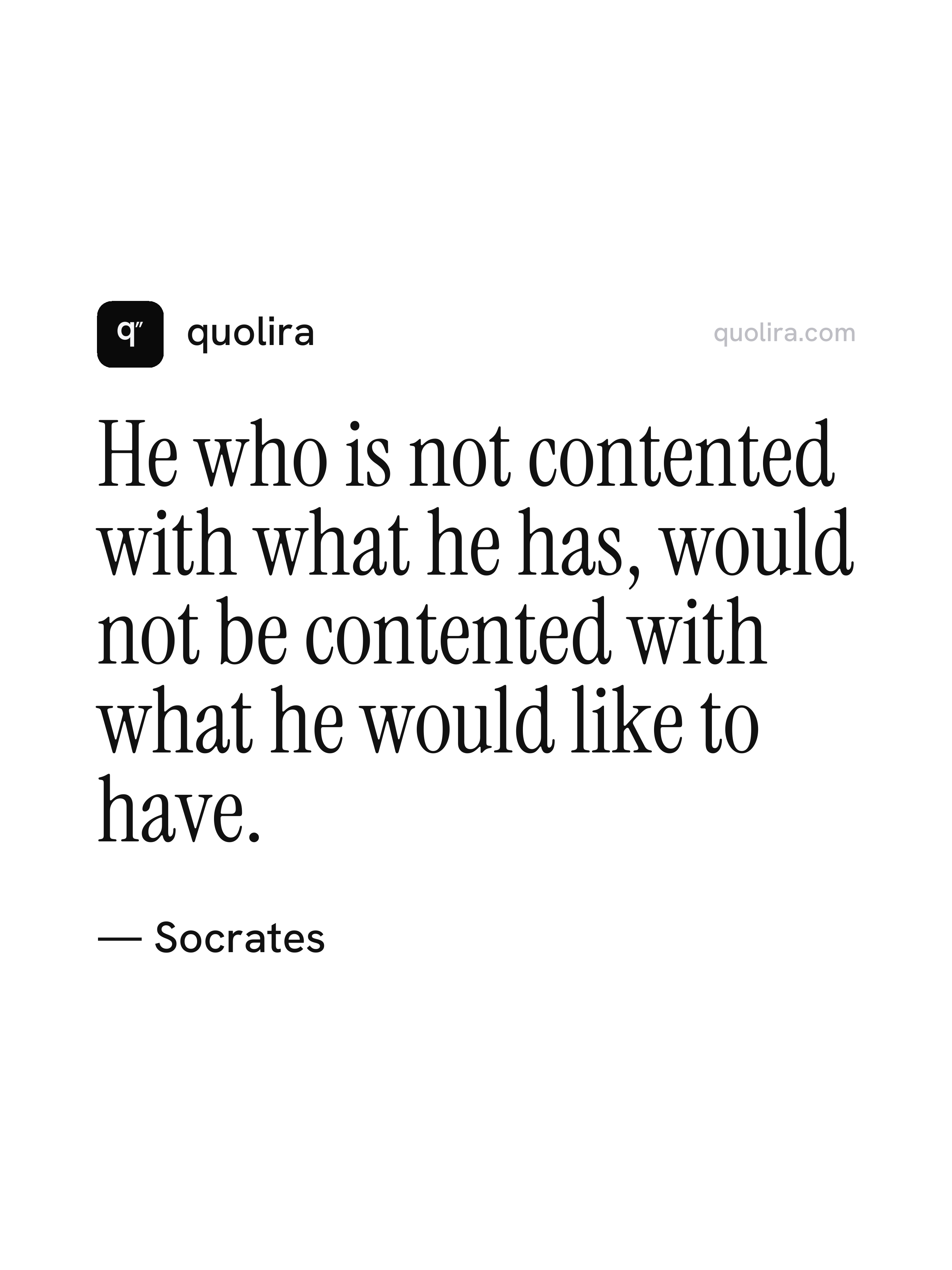
“He who is not contented with what he has, would not be contented with what he would like to have.”
Socrates · attributed
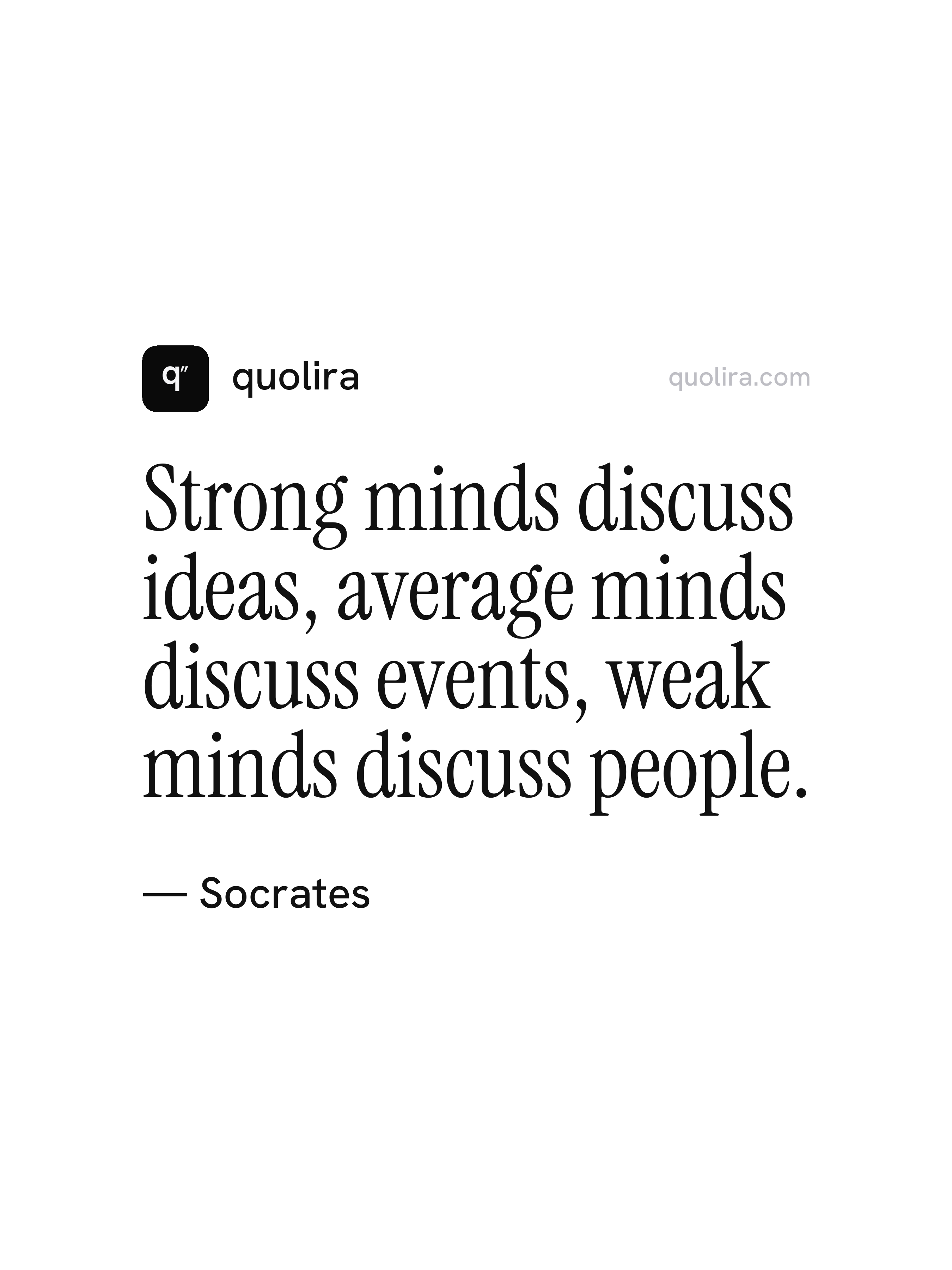
“Strong minds discuss ideas, average minds discuss events, weak minds discuss people.”
Socrates · attributed
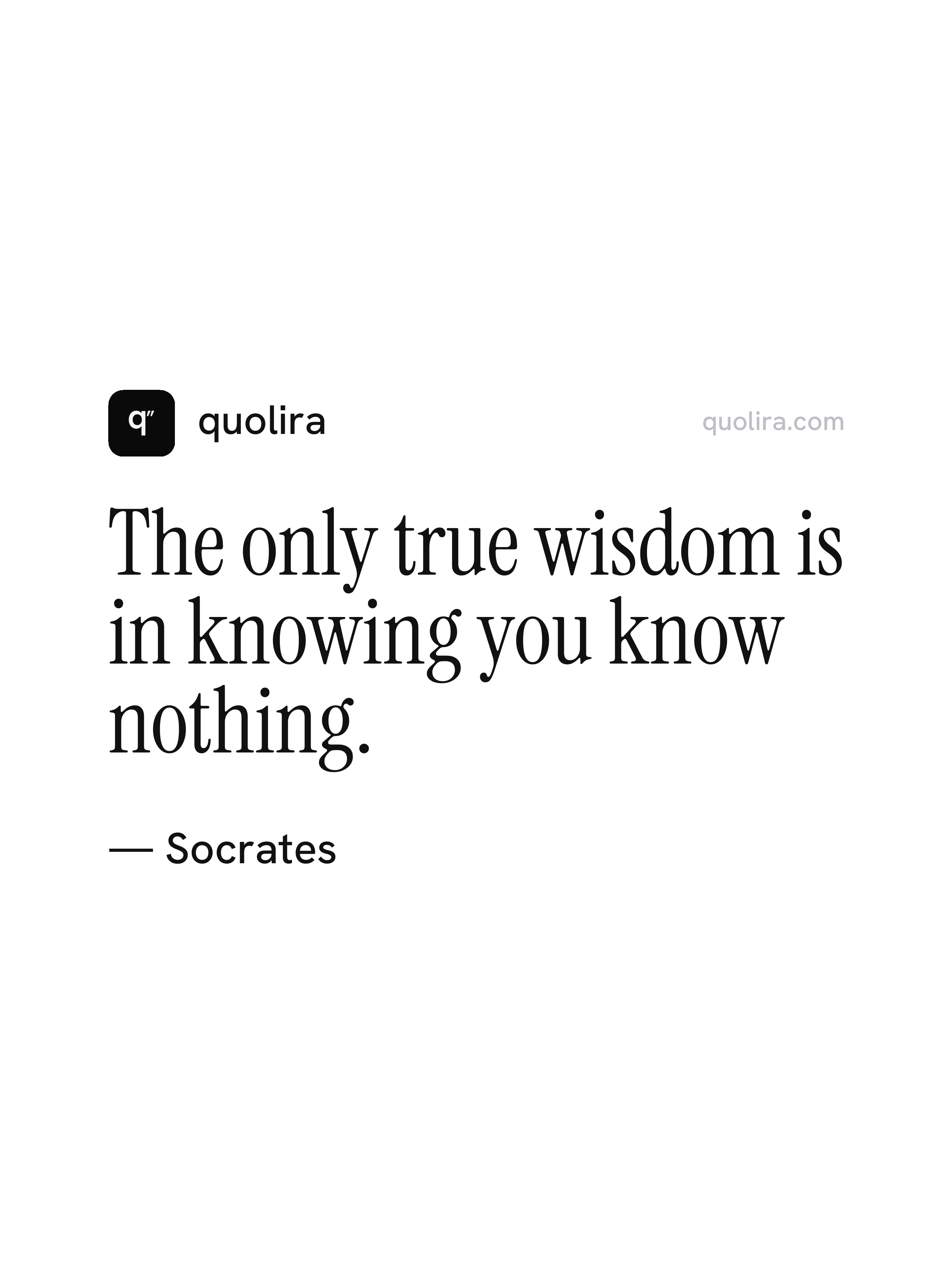
“The only true wisdom is in knowing you know nothing.”
Socrates · paraphrase from Plato, Apology
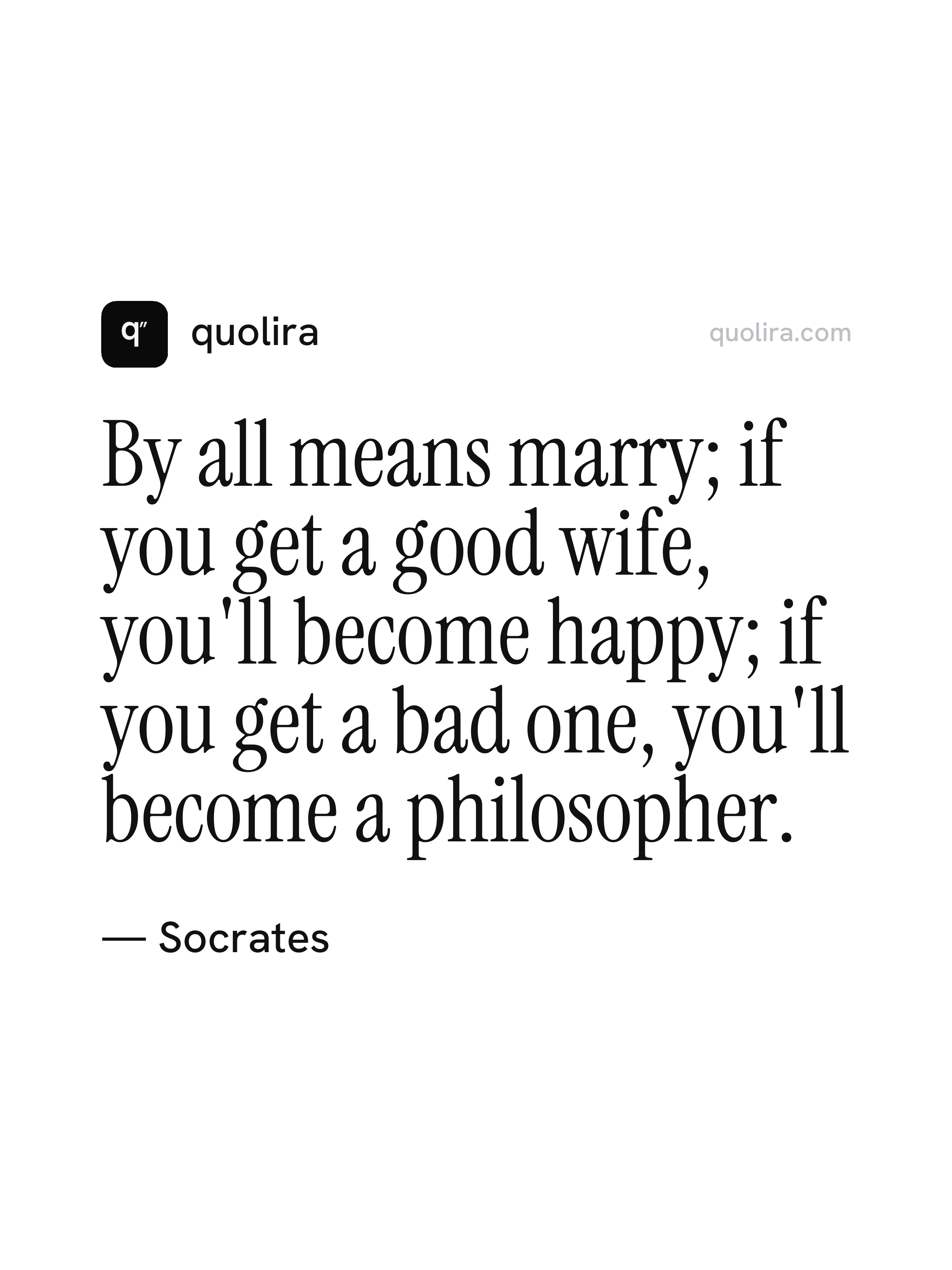
“By all means marry; if you get a good wife, you'll become happy; if you get a bad one, you'll become a philosopher.”
Socrates · attributed via Diogenes Laertius
“Be as you wish to seem.”
Socrates · attributed
“Wisdom begins in wonder.”
Socrates · attributed
“To find yourself, think for yourself.”
Socrates · attributed