17 Anthony Bourdain Quotes That Still Hit Hard
The man ate everything, said what he meant, and left us thinking about it for years.

Anthony Bourdain quotes have a way of landing differently than most. He wasn't a philosopher in any formal sense, but he wrote and spoke with the kind of hard-won clarity that comes from actually living: from sleeping on kitchen floors, from eating in places nobody photographed for Instagram, from being honest about his own wreckage. These 17 quotes cover food, travel, and the human condition in his voice, which was always direct, often funny, and sometimes quietly devastating.
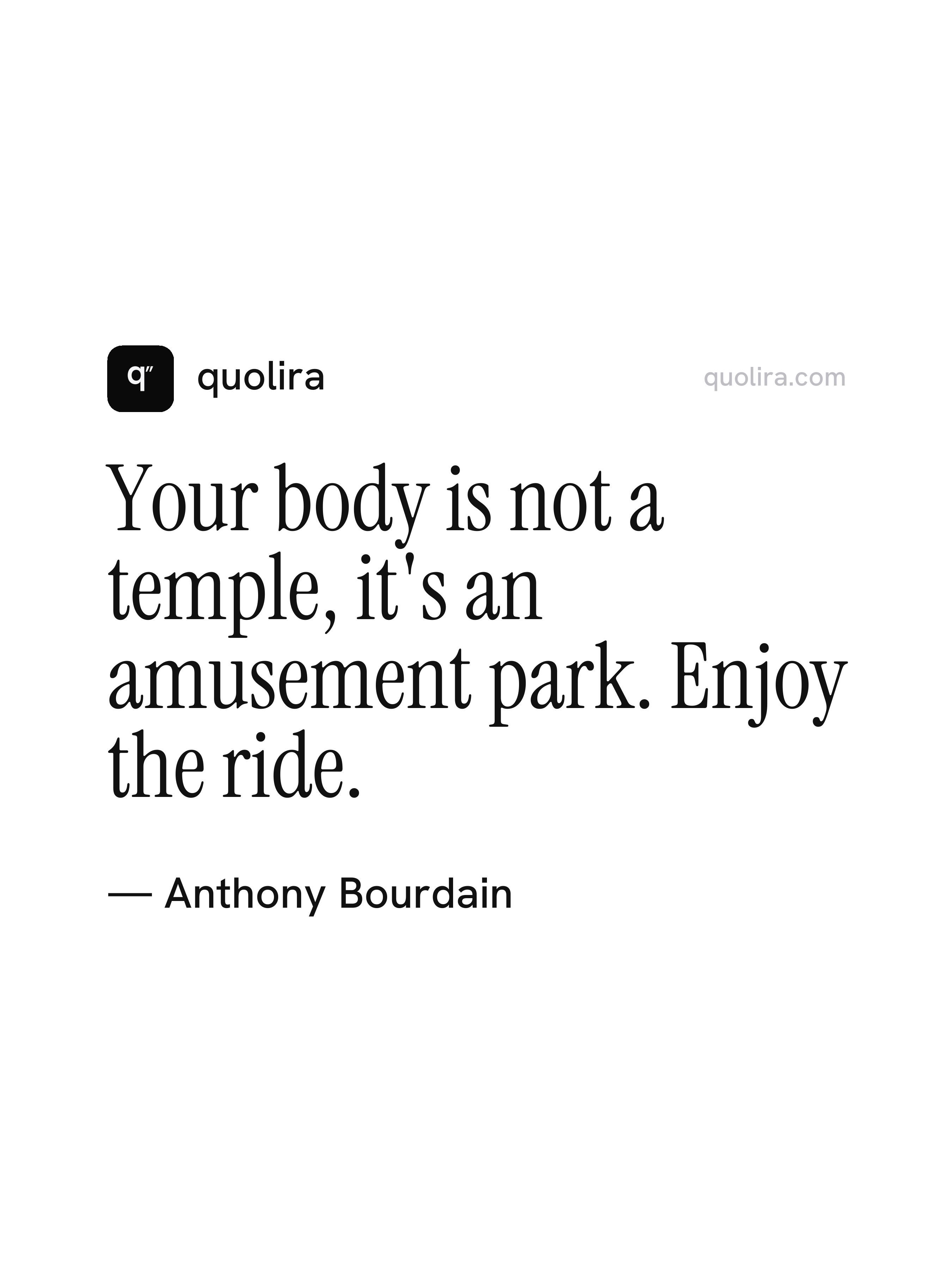
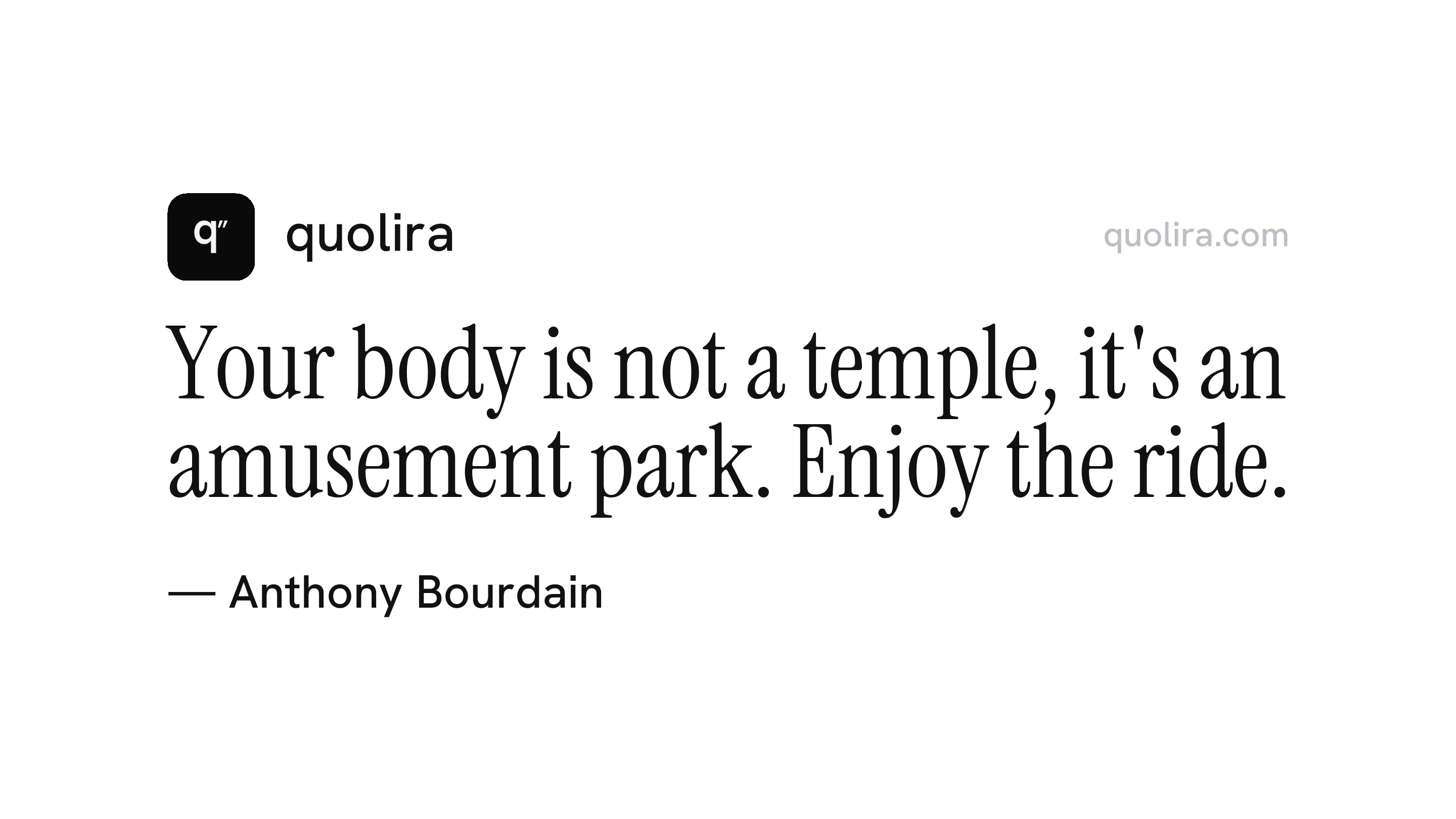
Your body is not a temple, it's an amusement park. Enjoy the ride.
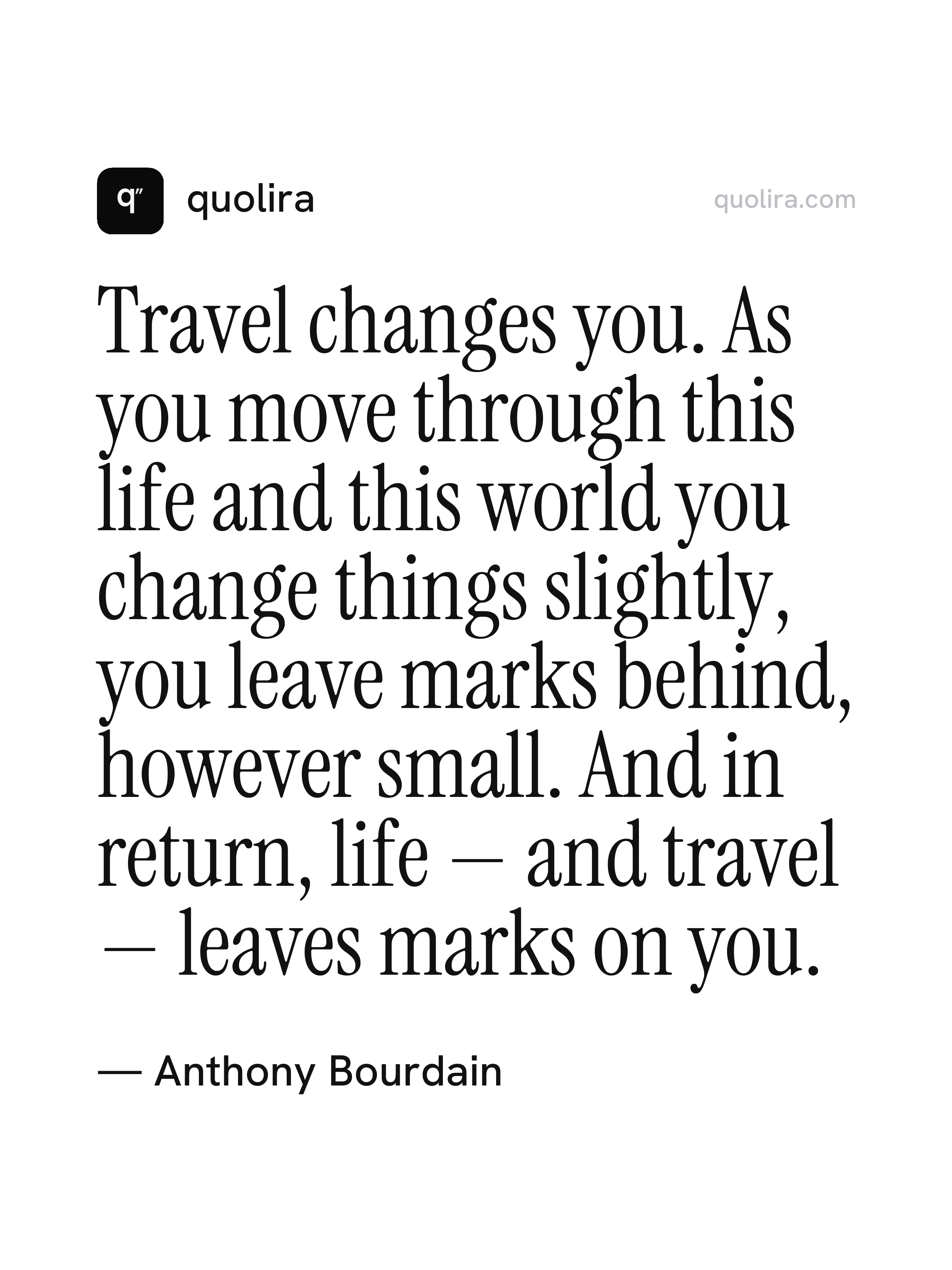
Travel changes you. As you move through this life and this world you change things slightly, you leave marks behind, however small. And in return, life — and travel — leaves marks on you.
Anthony Bourdain The Nasty Bits, 2006
He was describing something real here: that travel is a transaction, not just a spectacle. You take something and you leave something, even if neither is visible.
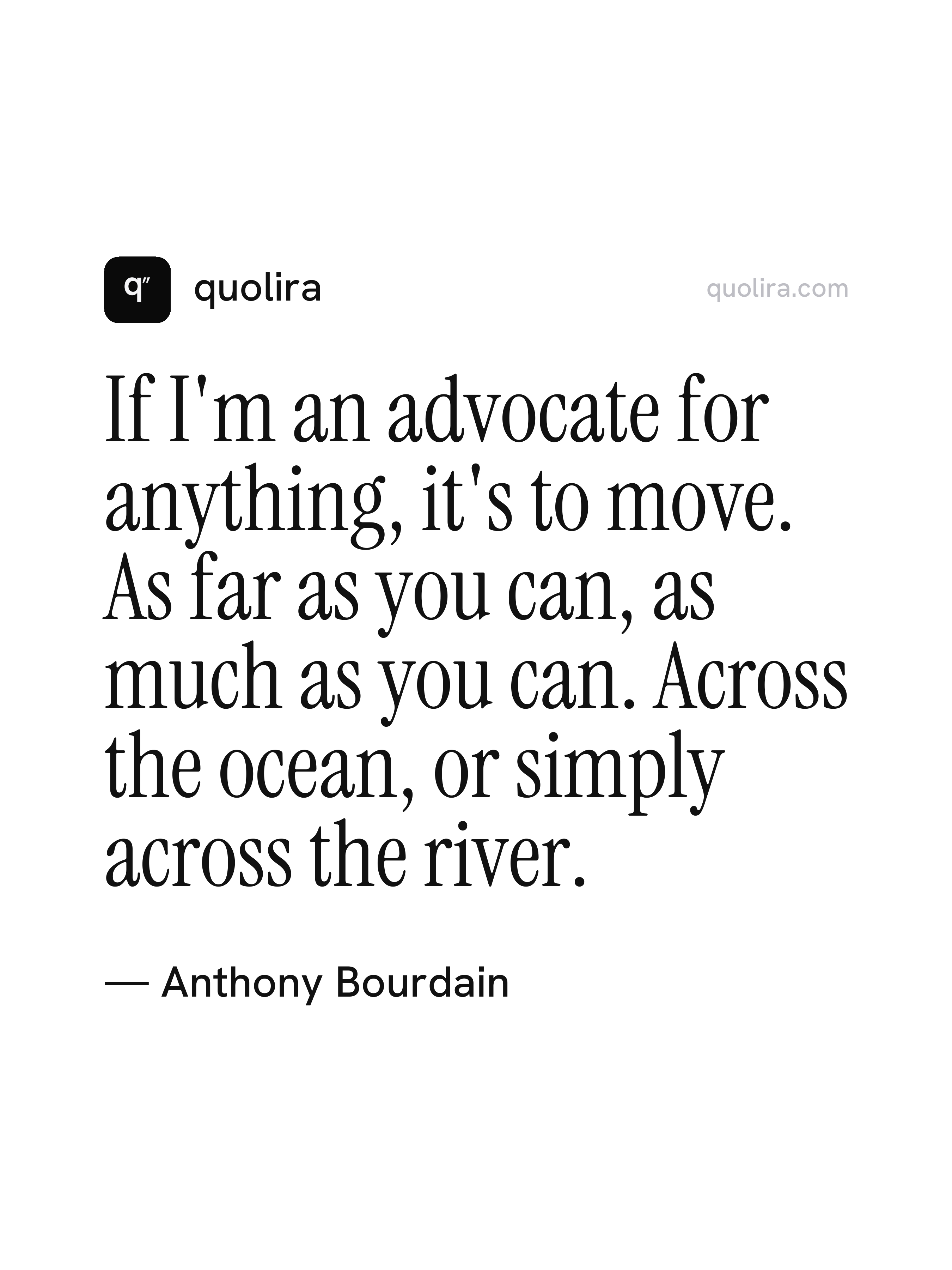
If I'm an advocate for anything, it's to move. As far as you can, as much as you can. Across the ocean, or simply across the river.
Anthony Bourdain Parts Unknown
He said this without romanticizing distance. You don't have to go far. You just have to go somewhere that isn't where you already are.
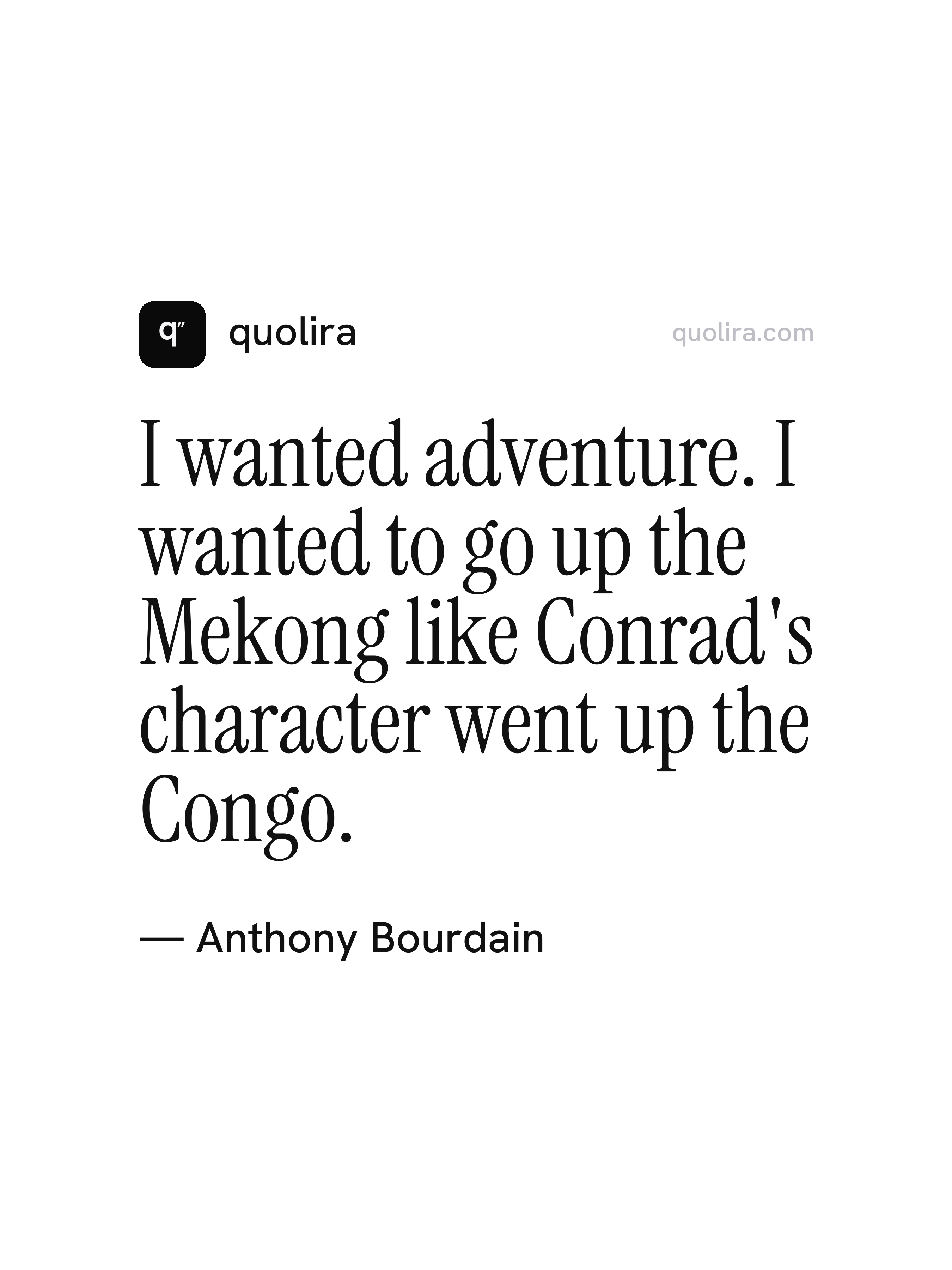
I wanted adventure. I wanted to go up the Mekong like Conrad's character went up the Congo.
Anthony Bourdain Kitchen Confidential, 2000
He was talking about why he became a cook, and it's a telling answer. He didn't say money or passion for food. He said adventure. That instinct drove everything that came after.
Kitchen Confidential: Adventures in the Culinary Underbelly
I cook, I eat, I travel. That's my life. It could be worse.
Deadpan and honest at the same time. He knew what he had, and he said so without making it sound like a blessing he needed to perform gratitude for.
Skills can be taught. Character you either have or you don't have.
He was talking about kitchens, but it applies everywhere. Technique is learnable. Showing up with integrity is a different thing entirely.
I should have been dead at 30. I should not, by any rights, be sitting here talking to you.
He said this with zero self-pity. It was just a fact about his years of drug use. That frankness about his own near-destruction made his later curiosity about life feel earned.

Without experimentation, a willingness to ask questions and try new things, we shall surely become static, repetitive, and moribund.
He applied this to cooking, but also to how he thought about curiosity in general. Settling into sameness was, for him, its own kind of dying.
Open your mind, get up off the couch, move.
Three imperatives, no preamble. He didn't dress it up. This was his core message stripped to its bones.
Medium Raw: A Bloody Valentine to the World of Food and the People Who Cook
Meals make the society, hold the fabric together in lots of ways that were charming and interesting and intoxicating to me.
He believed a shared meal was one of the oldest and most honest acts of civilization. Not the food itself exactly, but what the table does to people sitting around it.
The Way of the Pirate, as far as cooking goes, consists of a willingness to work hard, a willingness to put up with discomfort, and a certain recklessness.
Anthony Bourdain Kitchen Confidential, 2000
He romanticized the grit of professional kitchens, and he knew he was romanticizing it. That self-awareness is part of what made him credible.
Do we really want to travel in hermetically sealed popemobiles through the rural provinces of France, Mexico and the Far East, eating only at Hard Rock Cafes and McDonalds? Or do we want to eat without fear, tearing into the local stew, the humble taqueria's mystery meat, the sincerely offered gift of a lightly grilled fish head?
Anthony Bourdain Kitchen Confidential, 2000
This is Bourdain at his most combative and most persuasive. He was making a real argument: fear of the unfamiliar costs you the actual experience of being somewhere.
I'm a big believer in winging it. I'm a big believer that you're never going to find the perfect city travel experience or the perfect meal without a constant willingness to experience a bad one.
He applied this to food and travel, but it reads just as well as advice about almost any creative or personal risk. Accepting the bad meal is the price of the great one.
A Cook's Tour: Global Adventures in Extreme Cuisines
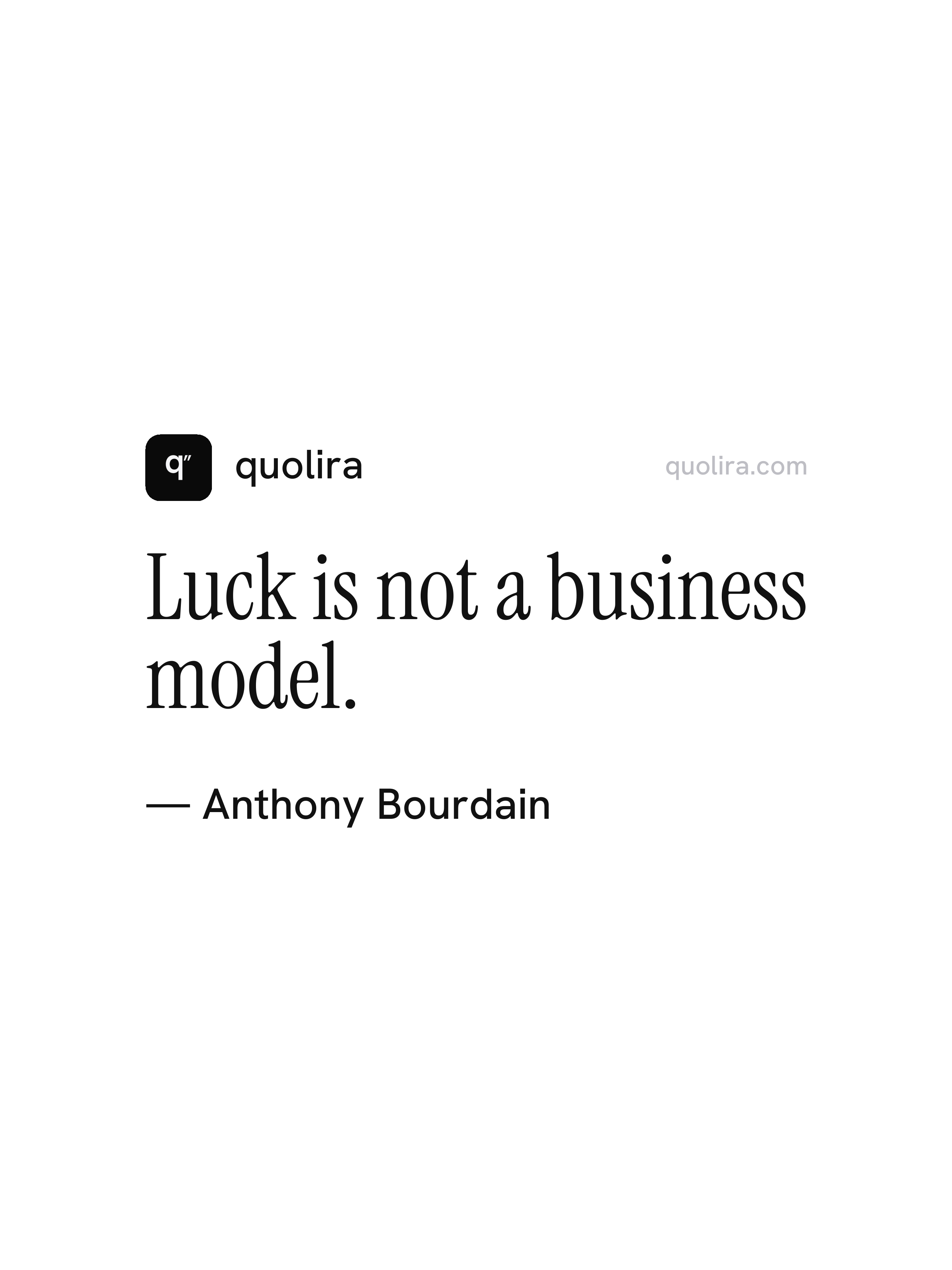
Luck is not a business model.
Four words. He said this about the restaurant business, but it's the kind of line that expands the longer you sit with it.
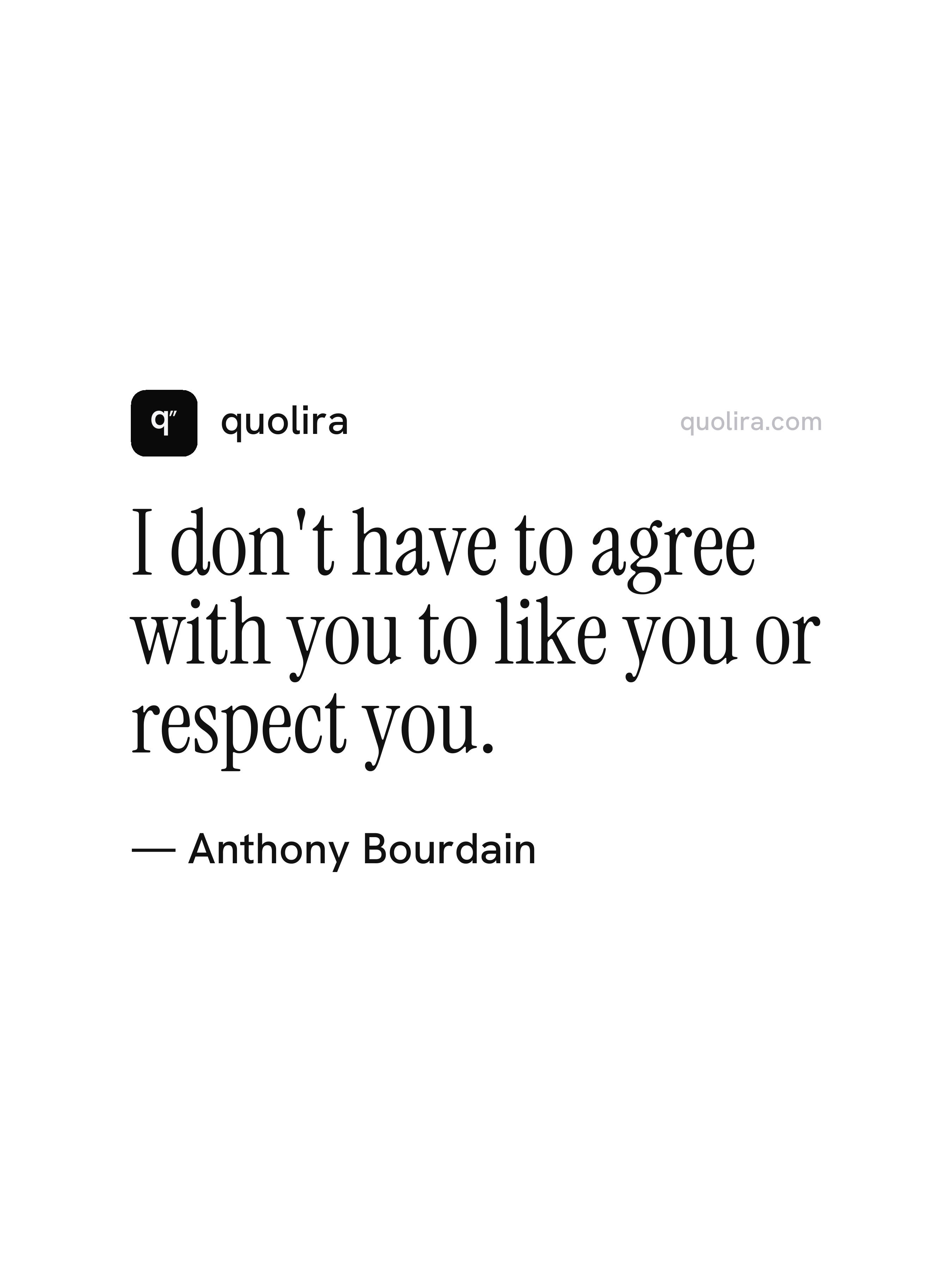
I don't have to agree with you to like you or respect you.
He modeled this consistently, sitting down with people whose politics and lives differed wildly from his own. He seemed genuinely curious about people rather than just tolerant of them.
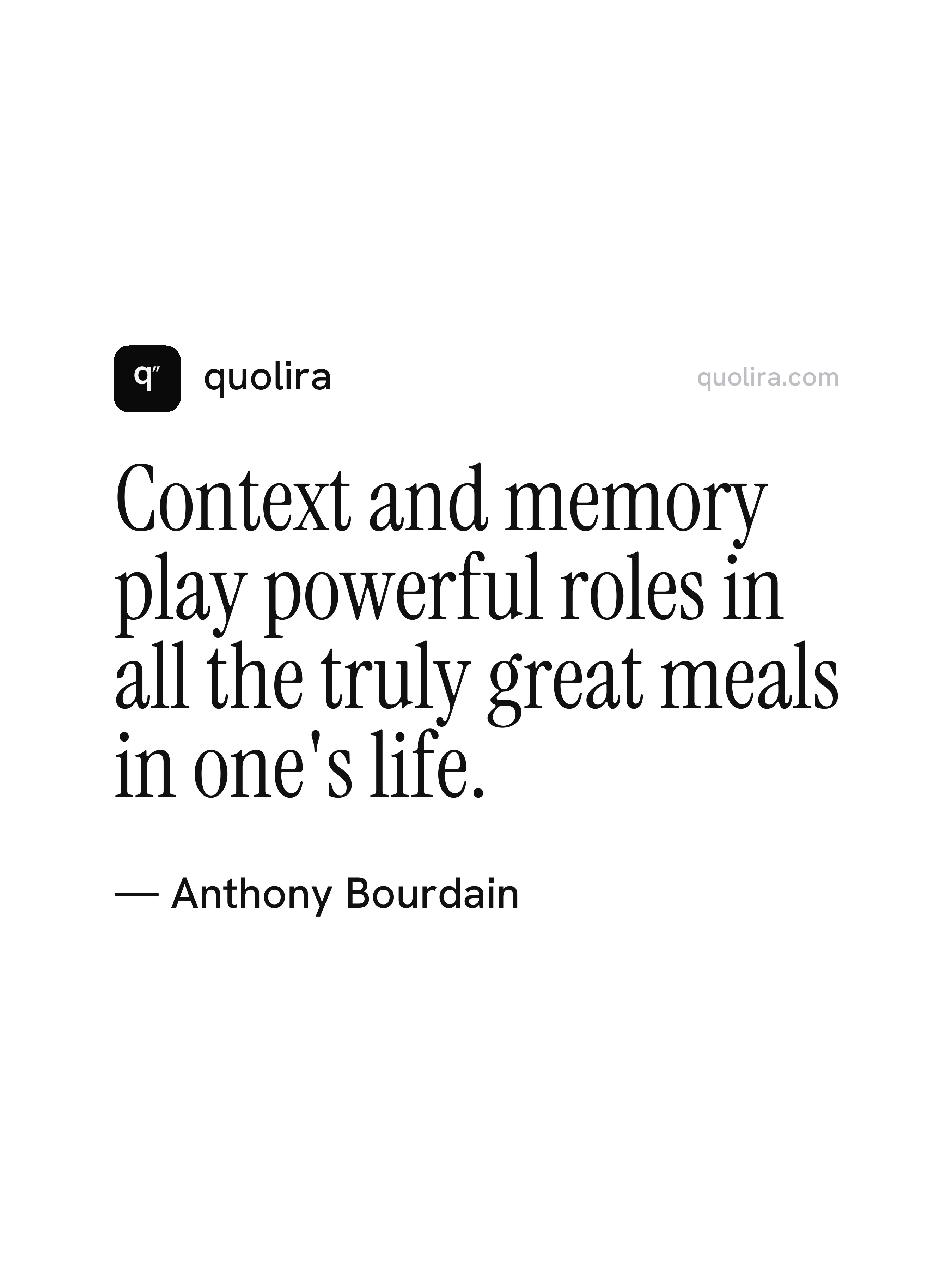
Context and memory play powerful roles in all the truly great meals in one's life.
Anthony Bourdain Medium Raw, 2010
He understood that the best meal you ever had probably wasn't technically perfect. It was the right food at the right moment with the right people, and that mix can't be replicated.
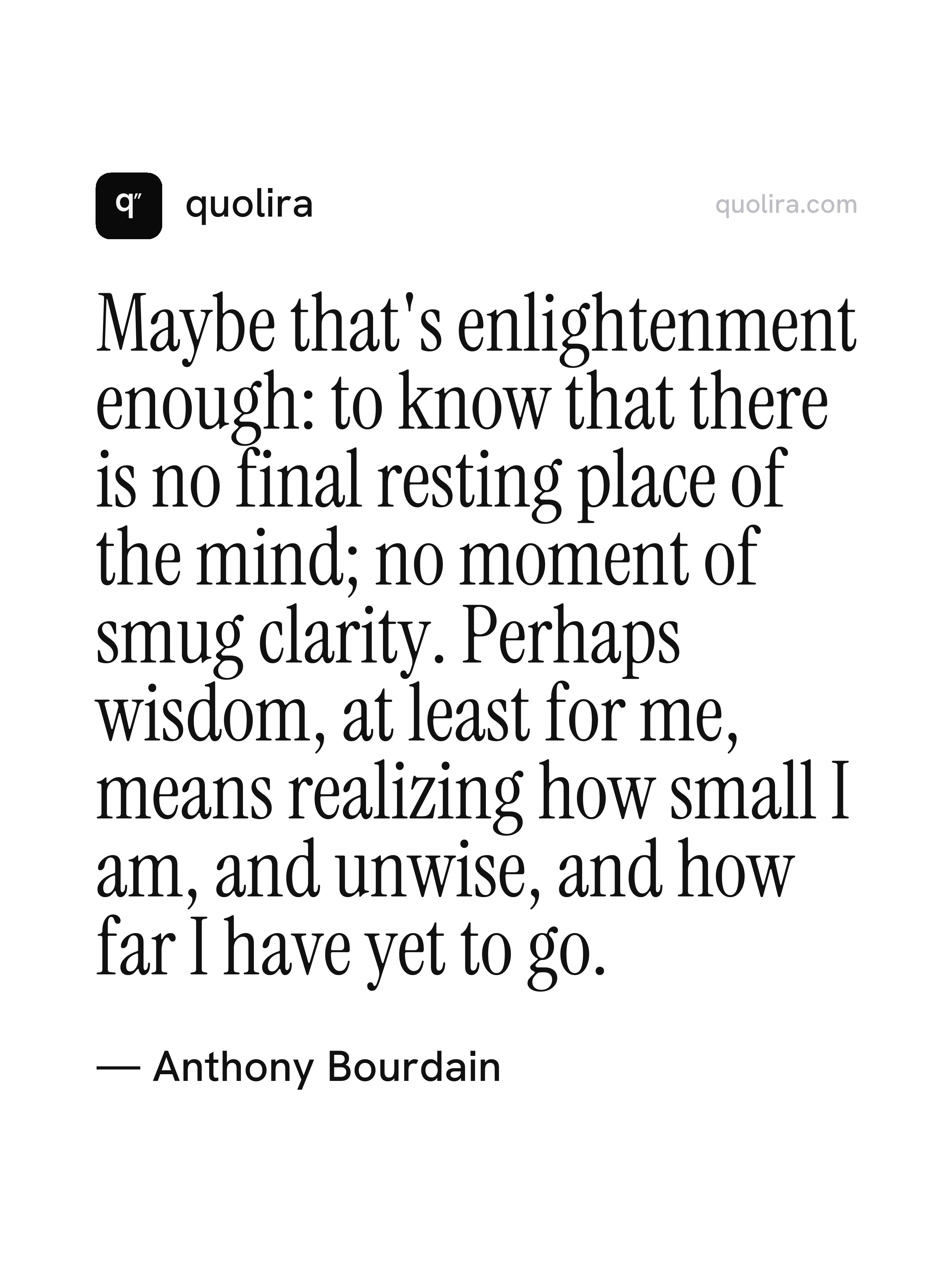
Maybe that's enlightenment enough: to know that there is no final resting place of the mind; no moment of smug clarity. Perhaps wisdom, at least for me, means realizing how small I am, and unwise, and how far I have yet to go.
Anthony Bourdain The Nasty Bits, 2006
This is the quietest thing he ever wrote, and probably the most honest. For someone who spent years being confident on camera, admitting smallness took something real.
Bourdain said what a lot of people felt but couldn't quite say. That's probably why his words keep circulating years after his death in 2018. Read one slowly if you can.
Frequently asked questions
What is Anthony Bourdain's most famous quote?
What books did Anthony Bourdain write?
What did Anthony Bourdain say about travel?
When did Anthony Bourdain die?
Keep reading
21 Lord Voldemort Best Harry Potter Quotes That Still Chill You
The most memorable lines from the Dark Lord, weighed for what they reveal about fear, power, and the man behind the mask.
14 Satchel Paige Quotes on Aging, Motion, and Not Looking Back
The pitcher who kept throwing into his fifties left behind lines about time that still land.
16 Alice in Wonderland Quotes That Still Make You Stop and Think
The strange logic of Wonderland has a way of feeling truer than the real world.
Bourdain wrote this early in his career and it became the line people repeated to justify ordering dessert. But underneath the joke is a genuine argument for showing up to life fully.