Your Mind Is a Crow
Why your brain can only carry so much at once, and what to drop.
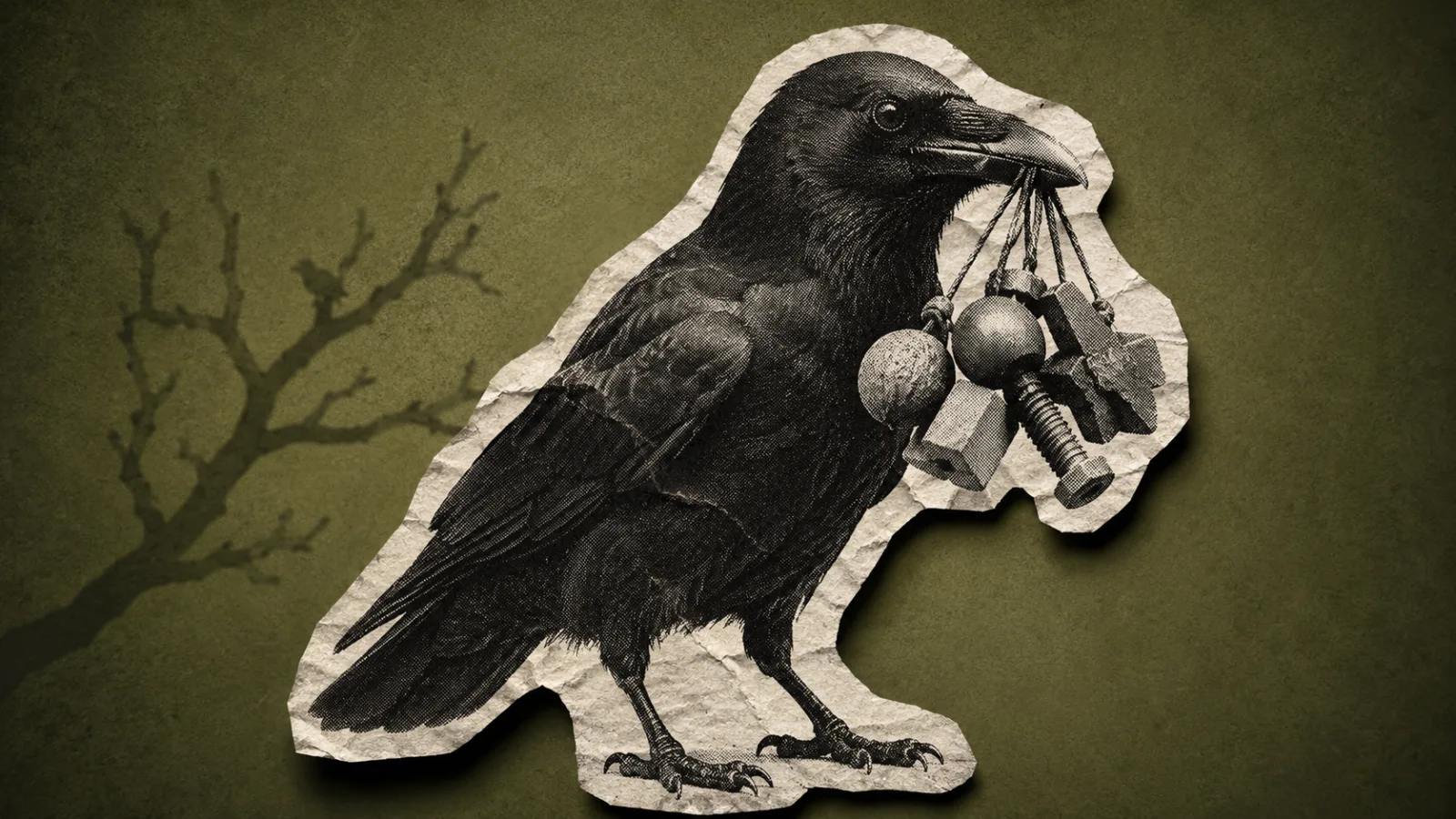
Mind capacity limits are real, and the crow understands them better than most productivity gurus do. A crow can only grip so many objects at once. Its beak, its claws, they have a hard ceiling. Cognitive overload works the same way: pile on enough competing priorities and nothing gets carried anywhere.
The crow doesn't overthink the load
Watch a crow work. It picks something up, tests the weight, and makes a call. If it's already carrying something better, it drops the new thing. There's no guilt about it, no second-guessing. The crow is not being lazy. It's being accurate about what its body can actually do.
Your mind runs on the same physics.
Working memory, the mental space where active thinking happens, holds somewhere around 4 distinct items at a time. That's the finding cognitive psychologists have kept landing on since the 1950s. Four. Not forty. When you try to juggle twelve things simultaneously, you're not multitasking. You're just cycling through a queue fast enough to feel busy while finishing almost nothing.
Mind capacity limits show up before you notice them
The tricky part is that overload doesn't always announce itself as overload. It shows up as fog. Distraction. That specific brand of exhaustion where you've been at your desk for three hours and don't know what you actually did.
The Organized Mind: Thinking Straight in the Age of Information Overload
That's the crow trying to carry eight things with two claws.
The question isn't how to carry more. It's which one object, right now, actually needs to be in the air.
When a crow drops something, it isn't giving up. It's making a precise, physical decision about what's worth carrying. That's a skill, not a failure.
What the swamp is really made of
When you're swamped, the feeling is usually about volume. Too many emails, too many projects, too many people waiting on you. But volume is often a distraction from the real problem: you haven't decided what actually matters today.
Six urgent tasks aren't all equally urgent. Three of them are probably urgent to someone else. One of them can wait two days with no real consequence. Maybe one genuinely needs you right now.
That's the object worth picking up.
Four Thousand Weeks: Time Management for Mortals
The rest? Leave them on the ground. You can come back. Crows do. They cache things, mark the spot, return when they're not already full.
How to use the crow the next time you're buried
You don't need a system. You need a question: What's the one thing I could actually carry right now?
Not the thing screaming loudest. The thing that, if you finished it, would make the rest of the pile smaller or lighter or less urgent. Find that one. Pick it up. Fly with it.
The rest stays on the ground. That's not neglect. That's a decision made by something that knows its own limits.
The crow figured this out a long time ago. You have the same capacity. You just might have forgotten that limits aren't failures. They're the shape of what's possible.
The crow doesn't spiral about what it had to leave behind. It flies with what it can hold. So can you.
Frequently asked questions
How many things can the human mind focus on at once?
What is cognitive overload and how does it affect productivity?
How do I decide what to prioritize when everything feels urgent?
Keep reading

25 Deep, Meaningful Quotes That Make You Stop and Think
Words from history's sharpest minds that cut straight to what matters.

17 Sad Quotes That Sit With You Long After You Read Them
Words that don't try to fix the ache, just name it honestly.

Kintsugi - The Gold in the Cracks
What a 500-year-old Japanese repair method teaches us about carrying our damage with dignity.