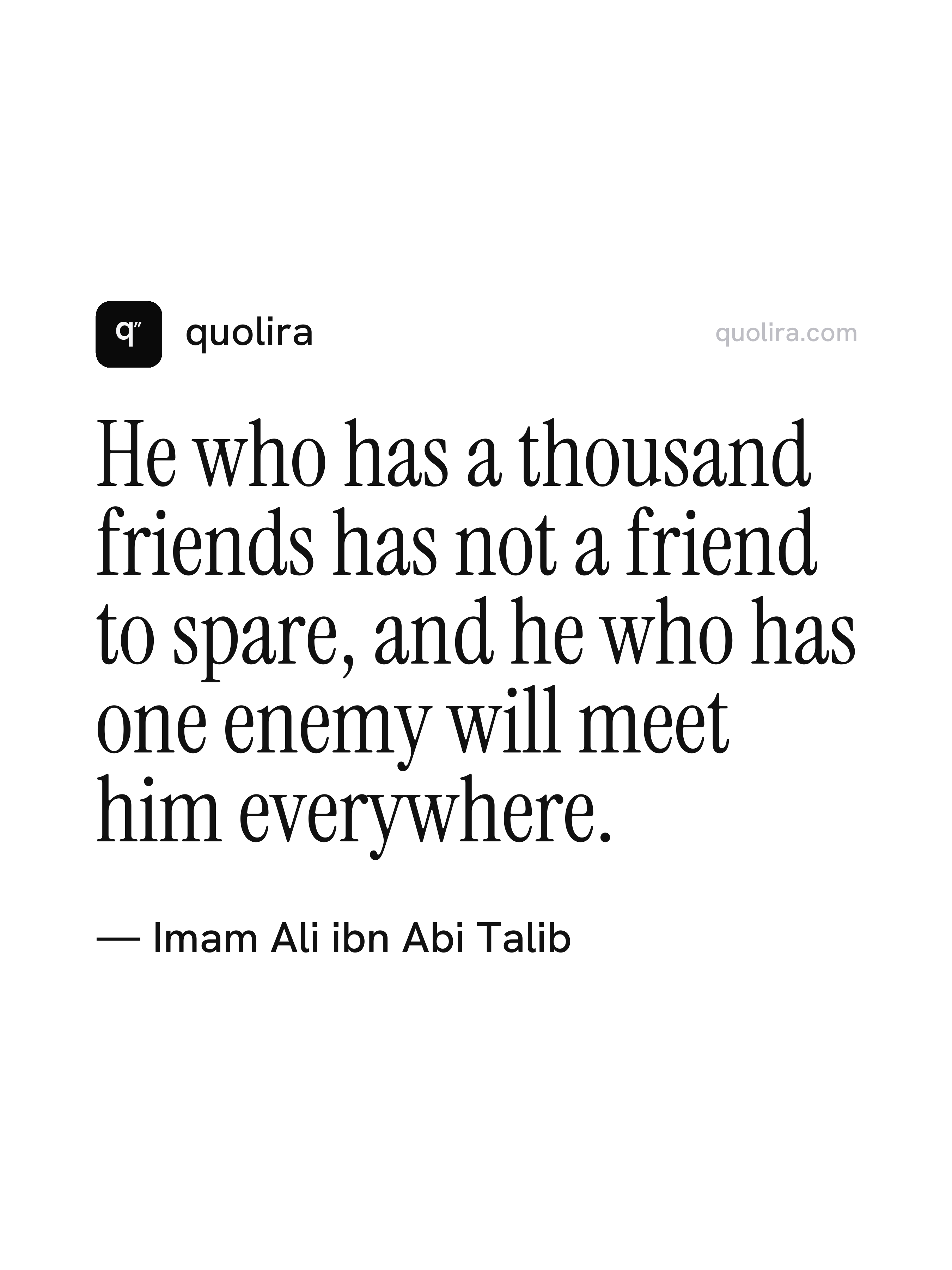
“He who has a thousand friends has not a friend to spare, and he who has one enemy will meet him everywhere.”
Imam Ali ibn Abi Talib · attributed
 quolira
.com
quolira
quolira.com
At its surface this saying seems almost contradictory: how can silence be a sermon? The point is that words are easy to produce and easy to waste, while meaningful, deliberate quiet communicates something words rarely can. Silence can signal dignity, wisdom, and self-possession. It can ask a listener to reflect rather than simply absorb. In a tradition that valued eloquence highly, calling silence the most eloquent form of address is a striking and deliberate inversion meant to make us reconsider what genuine communication requires.
This saying is attributed to Imam Ali ibn Abi Talib, the cousin and son-in-law of Prophet Muhammad, who is revered as a figure of deep learning, justice, and spiritual insight in both Sunni and Shia Islamic traditions. Ali is associated with a large body of aphorisms and speeches, many of which are gathered in the classical compilation known as Nahj al-Balagha. Whether this particular line appears in that collection or comes from other attribution channels, it reflects themes consistent with his recorded thought: the danger of careless speech, the weight of words, and the wisdom of knowing when not to speak.
Imam Ali ibn Abi Talib lived in the seventh century and occupies a unique place in Islamic history. He was among the earliest converts to Islam, a companion of Prophet Muhammad, and later became the fourth caliph. In Shia Islam he is considered the first legitimate imam after the Prophet. He is remembered as a warrior, a judge, a scholar, and a poet, and the sayings attributed to him cover justice, knowledge, humility, and the nature of the soul.
“He who has a thousand friends has not a friend to spare, and he who has one enemy will meet him everywhere.”
Imam Ali ibn Abi Talib · attributed
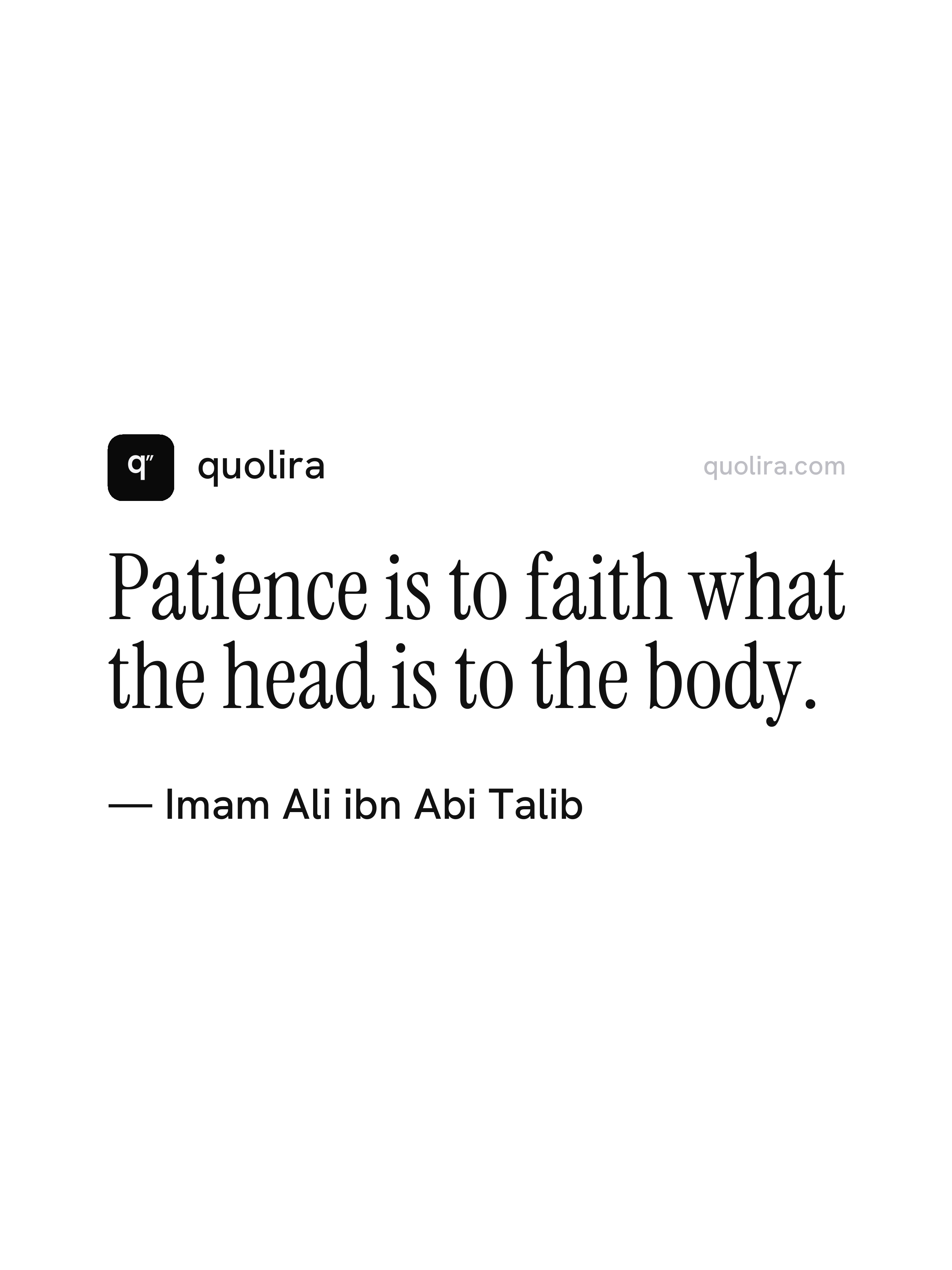
“Patience is to faith what the head is to the body.”
Imam Ali ibn Abi Talib · attributed, Nahj al-Balagha tradition
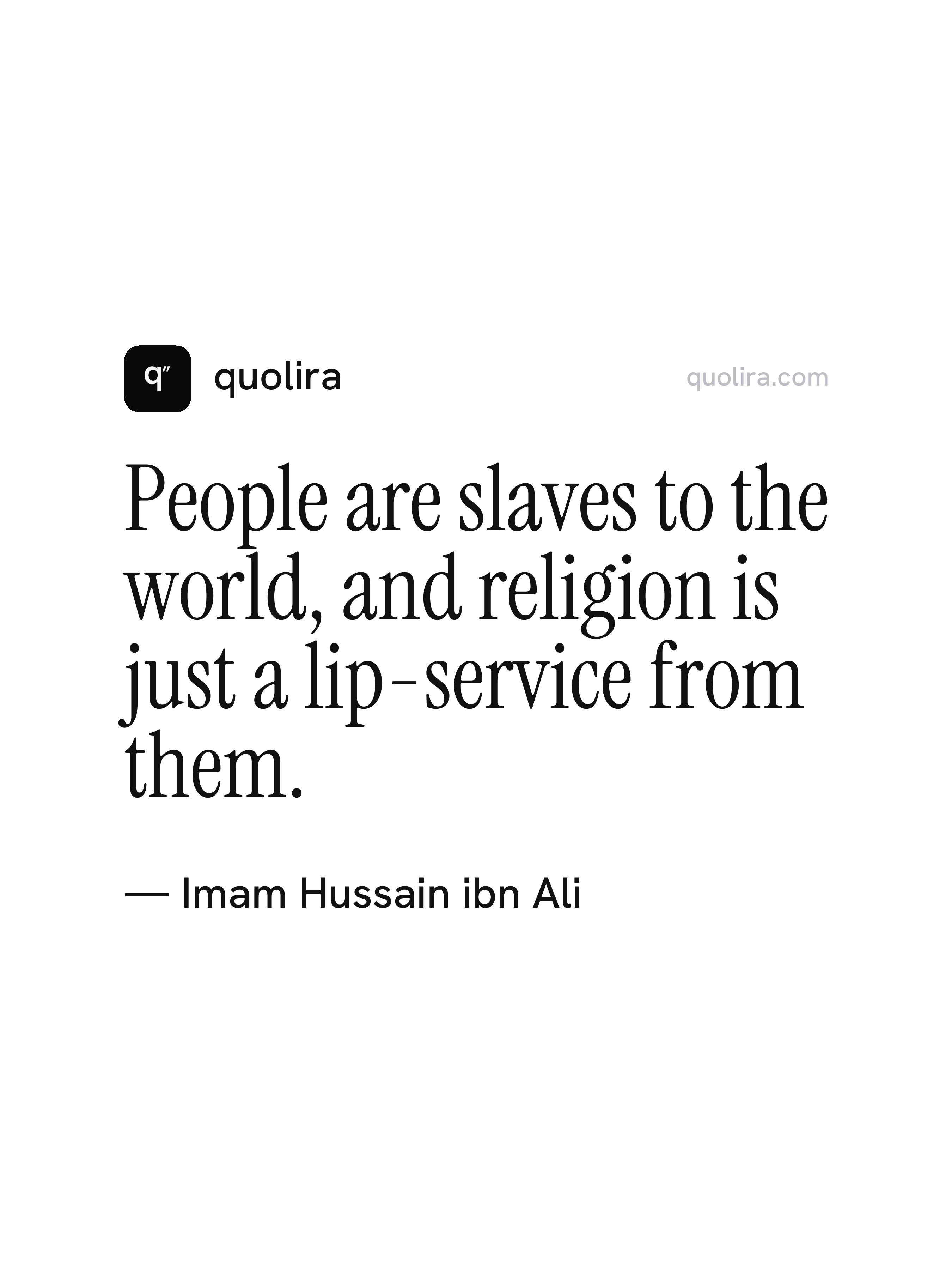
“People are slaves to the world, and religion is just a lip-service from them.”
Imam Hussain ibn Ali · attributed
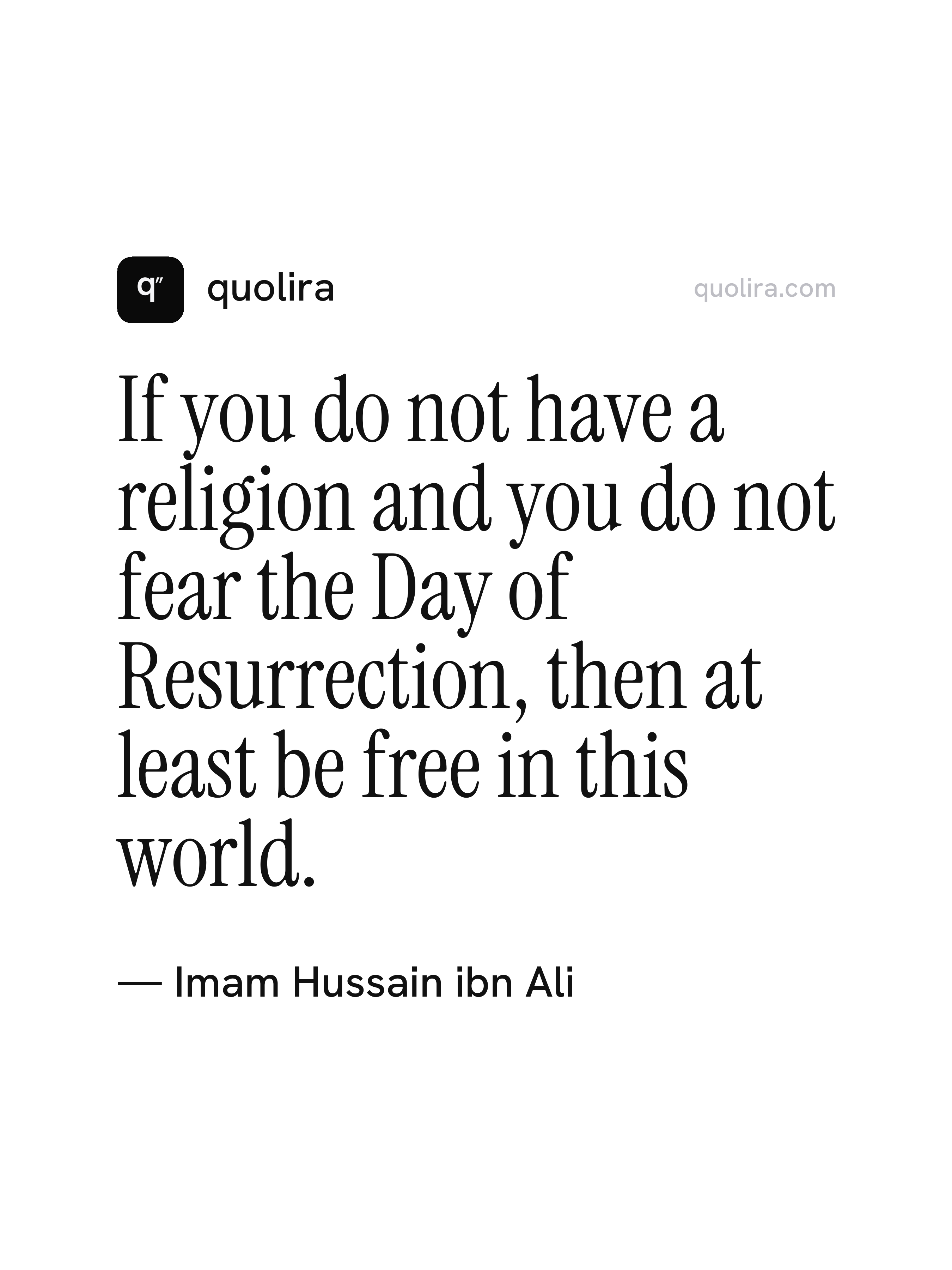
“If you do not have a religion and you do not fear the Day of Resurrection, then at least be free in this world.”
Imam Hussain ibn Ali · attributed, addressed at Karbala
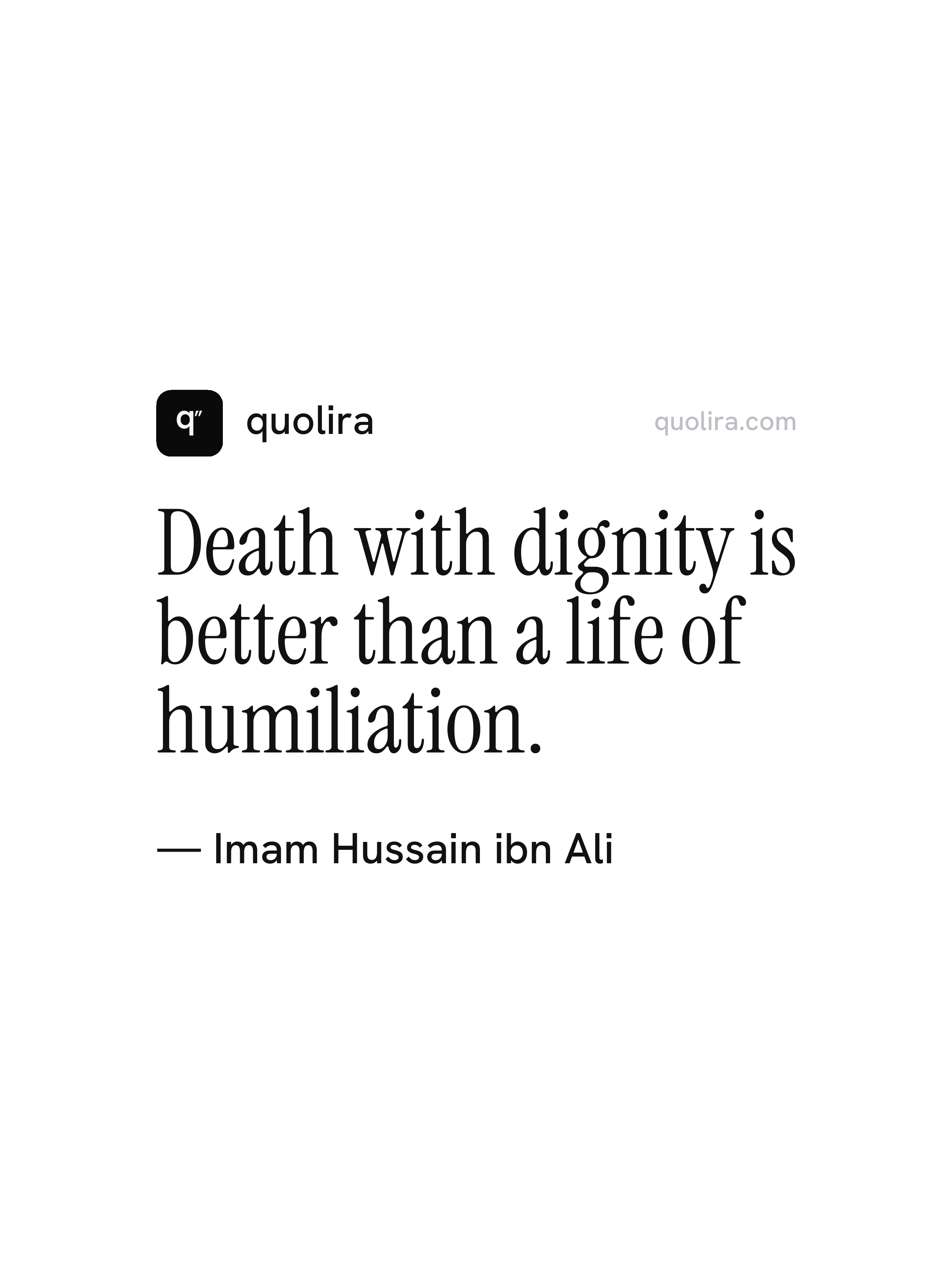
“Death with dignity is better than a life of humiliation.”
Imam Hussain ibn Ali · attributed, Karbala
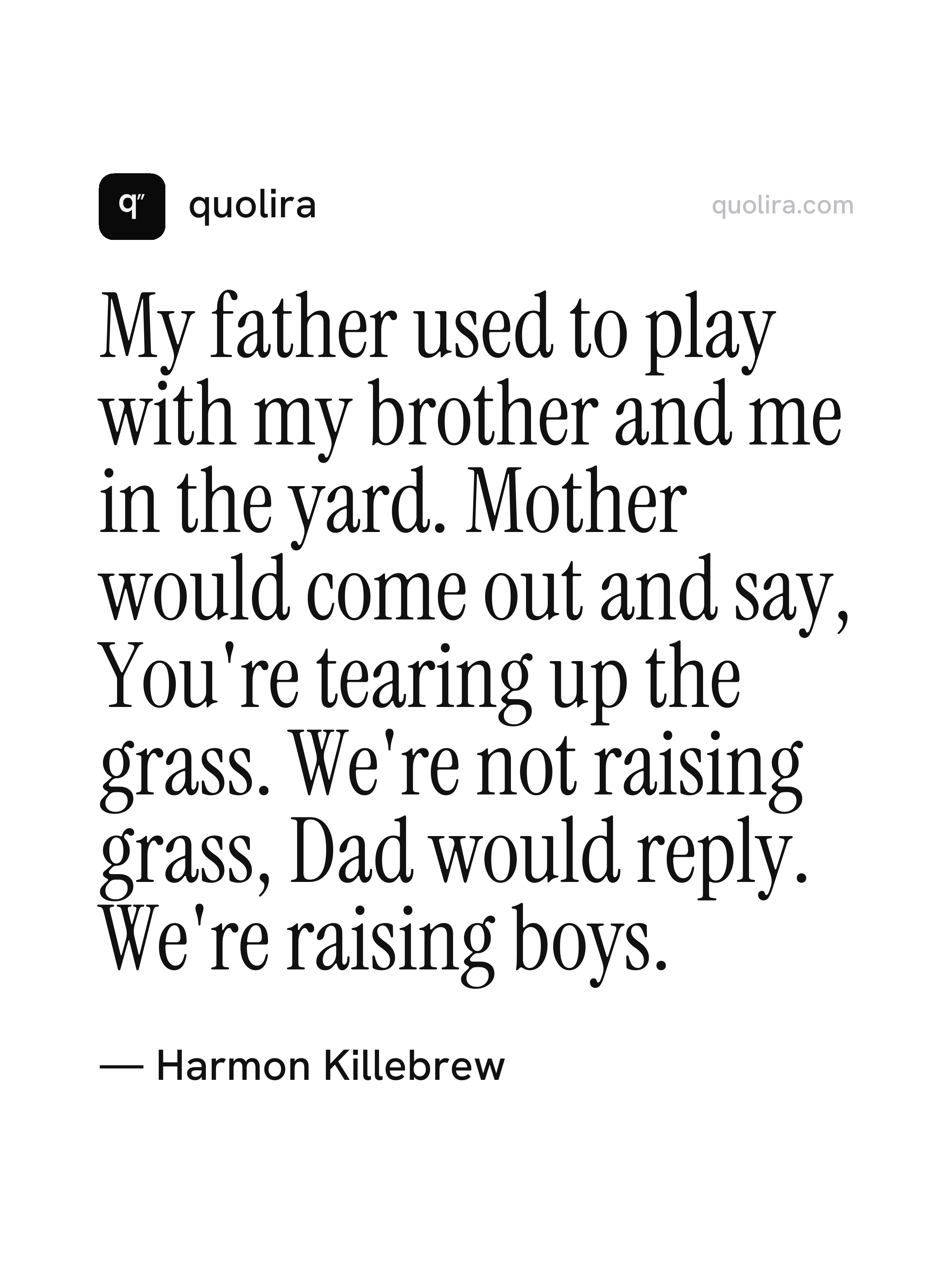
“My father used to play with my brother and me in the yard. Mother would come out and say, You're tearing up the grass. We're not raising grass, Dad would reply. We're raising boys.”
Harmon Killebrew
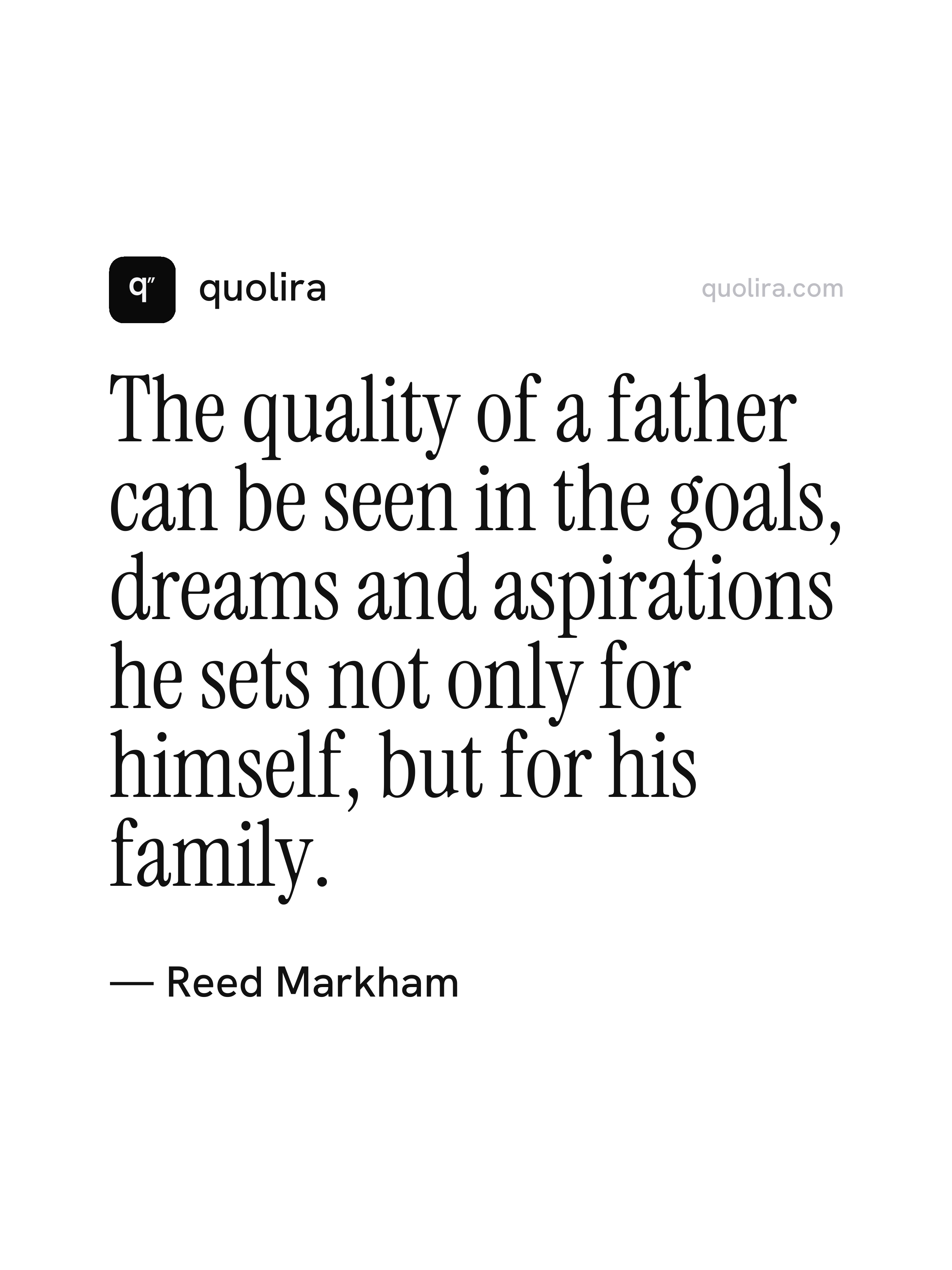
“The quality of a father can be seen in the goals, dreams and aspirations he sets not only for himself, but for his family.”
Reed Markham
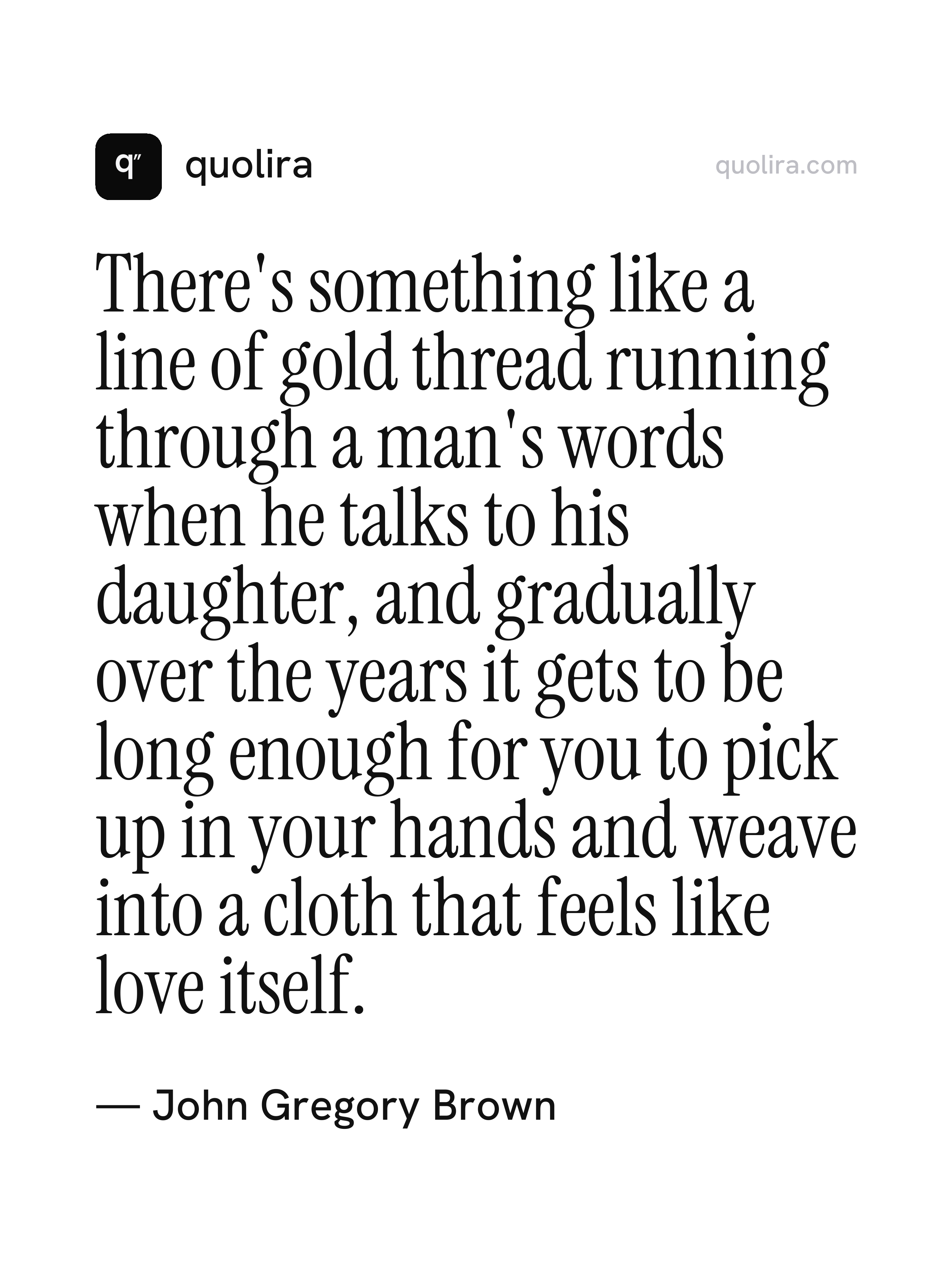
“There's something like a line of gold thread running through a man's words when he talks to his daughter, and gradually over the years it gets to be long enough for you to pick up in your hands and weave into a cloth that feels like love itself.”
John Gregory Brown · Decorations in a Ruined Cemetery
“A girl's father is the first man in her life, and probably the most influential.”
David Jeremiah
“Fatherhood is pretending the present you love most is soap-on-a-rope.”
Bill Cosby · Fatherhood, 1986
“I believe that what we become depends on what our fathers teach us at odd moments, when they aren't trying to teach us.”
Umberto Eco · Foucault's Pendulum
“When I was young, my father told me that my mother would teach me how to love, and he would teach me how to live.”
Common attribution, traditional